Inspecting a High-End Florida Home: Roof, Wind, Pool, Lanai and Stucco
A buyer of a large Florida home typically orders a general inspection plus specialist work: a wind mitigation inspection, a roof evaluation, a pool and spa inspection, a wood-destroying organism (termite) report and, where the house has stucco, a closer look at the walls. Each covers a different part of the house, and a general inspection alone will not replace them.
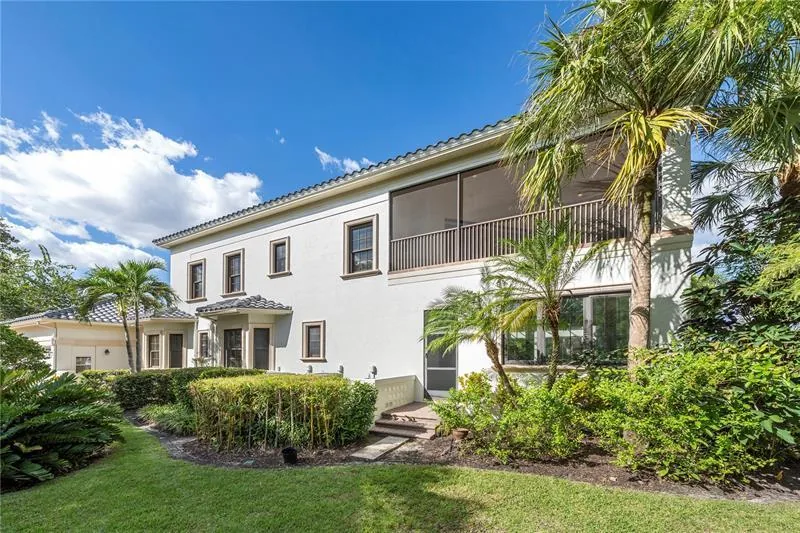
A big house has more to hide than a small one. There are more roof planes, more air-conditioning zones, more glass, more plumbing runs, and usually a pool, a screened lanai and exterior wall systems that nobody wants to open up. A single general inspection is a useful start, but it is a sampler. This page explains the inspections a careful buyer orders on a high-end Florida home, what each one can and cannot tell you, and what Florida law says about the ones that are regulated. It uses no price figures because costs vary by inspector and house size; get written quotes before you book.
Why is one general inspection not enough?
Florida defines the service narrowly. A home inspection under state law is a limited, visual examination of readily accessible, installed systems and components, covering the structure, electrical, heating and cooling, roof covering, plumbing, interior and exterior components and site conditions that affect the structure. Each word in that definition carries weight. Limited means the inspector is not tearing anything apart. Visual means what can be seen. Readily accessible means not behind finished walls, not under the pool deck and not under a full attic of insulation that the inspector cannot safely cross.
None of this is a criticism of general inspectors. It is the scope, and it is the reason specialists exist. On a home with a tile roof, a screened pool enclosure and a large amount of exterior stucco, the sensible approach is to treat the general inspection as the coordinating document and add specialists wherever the house has features that deserve more than a visual pass.
If your contract is the As Is version, the inspection period is where you decide. The seller has no repair obligation in that form, so what the inspectors find either becomes your negotiating basis for a price conversation or your reason to cancel while you still can. How that works is explained on the buying process page.
What does a general home inspection cover on a large house?
Expect a licensed home inspector to walk the roof surface or view it from a ladder or drone, run the air-conditioning and heating systems, test a sample of outlets, open the electrical panel, run water at fixtures, check the water heater, look at insulation where it is reachable, test garage doors and look at the grading, drainage and exterior envelope. They write a report that ranks findings by seriousness.
Size changes the job. On a home with multiple air-conditioning systems, several water heaters, multiple electrical panels and a detached guest house, you can ask the inspector how long the visit will take and whether a second inspector or an extra day is needed. A report produced in a rush on a house like that is the one most likely to say "not inspected" in places that matter. Ask for the report to name every system that could not be reached, and then arrange a follow-up for those.
Plan to attend the end of the inspection. Walk the house with the inspector, ask them to show you each major finding and take your own photos. The report is easier to read after you have seen the item.
What does a wind mitigation inspection tell you?
Florida insurers rate wind risk partly on how the house is built, and the state has a standard way to record it. A wind mitigation inspection documents the features that help a house resist wind damage and records them on the Uniform Mitigation Verification Inspection Form, numbered OIR-B1-1802. The Office of Insurance Regulation says the current version took effect April 1, 2026, and a completed form stays valid for up to five years as long as the structure has not materially changed and the form has no inaccuracies.
The inspector looks at the roof covering, the way the roof deck is attached, how the roof is connected to the walls, the roof shape, any secondary water barrier, and the protection of openings such as windows, doors and garage doors. Attic access matters because several of these features can only be verified there. Receipts, permits and product approval documents can help get credit for features that cannot be seen.
Insurers use the completed form to apply discounts to the windstorm portion of the premium. The Florida Department of Financial Services lists features that can earn discounts, including approved roof coverings, properly fastened roof decks, clips or straps at the roof-to-wall connection, hip roofs, a secondary water barrier, shutters and braced or hurricane-rated garage doors. It also notes that homes built to the 2001 Florida Building Code or later qualify for a discount automatically, and that more can be earned with additional features.
Who is allowed to perform it
Not every inspector can sign the form. Qualified inspectors include licensed home inspectors who completed the state's hurricane mitigation training and passed a proficiency exam, and licensed general, building or residential contractors, professional engineers, architects and certified building code inspectors. Both the Office of Insurance Regulation and Citizens Property Insurance advise confirming the inspector's authorization and that the professional license is active before hiring. A form signed by someone who is not authorized may be refused by an insurer.
Use it before you commit to a policy
Order the wind mitigation inspection during the inspection period and share it with your insurance agent early. The result affects what quotes look like, and the homeowners insurance page explains how insurers weigh roof age and mitigation. A seller may already have a current form on file. If so, ask for it, then decide whether you want your own inspector to confirm it, because a form can carry an error.
How should you evaluate the roof?
The roof is the single most expensive exterior item and the one with the most variables: material, age, installation quality, underlayment, flashing at penetrations, and the history of repairs after storms. A general inspector will describe the visible condition. A roofing contractor or specialist inspector can go further, checking flashing, valleys, ridge caps, tile attachment and signs of water entry from the attic side.
Ask the seller for the roof's installation date, the permit record, any warranty and any claim history. A permit record is a public document in most jurisdictions and it can confirm whether the work was permitted and finalized. Ask the roofer for an opinion in writing about remaining service life and about any repairs needed before the next hurricane season. Insurers weigh roof age heavily, so the roof's condition is both a physical and a financial question.
On a tile or barrel roof, the tile is not the waterproofing layer; the underlayment beneath it is. A visual inspection of the tile surface says little about that layer, which is why an inspector with experience in your specific roof type is worth finding. If the roof is near the end of its expected life, you can use the information in the price discussion or in your insurance planning. The hurricane preparedness page covers how roof condition ties into storm readiness.
What is a four-point inspection, and do you need one?
A four-point inspection is a narrow report on the roof, electrical, plumbing and HVAC systems. Insurers commonly request one on homes older than about 20 years when a buyer applies for a new policy or an owner renews. Not every home in a newer community will need it, but a home with older systems or recent renovation may prompt a carrier to ask, so check with your insurance agent early. The inspector fills out a standard format and often photographs the equipment, panel and plumbing material. If your general inspector is licensed and experienced with four-point forms, they can often do both in one visit. Ask the insurance agent which format the carrier accepts.
How do you inspect a pool, spa and lanai?
Pools are specialist territory. A general home inspector may note that a pool exists and comment on visible condition, but pool equipment, the shell and plumbing, the heater, the pumps, the automation, the salt cell and the decking are better assessed by a pool service company or a licensed pool contractor.
What a pool inspection looks at, in practical terms:
- Shell and surface: cracks, staining, delamination, tile condition and signs of leaks.
- Equipment: pump, filter, heater or heat pump, salt system, automation and lighting, including age and any noise or leaking.
- Water loss: whether the pool loses water faster than evaporation would explain, which can signal a leak in the shell or plumbing.
- Deck and coping: cracks, heaving and drainage away from the house.
- Spa: jets, heater, spillover and the plumbing connection to the main pool.
- Barriers and safety features: covered in the next paragraph.
Florida's Residential Swimming Pool Safety Act requires a new residential pool to have at least one of five safety features to pass final inspection: an enclosure that meets the barrier standards, an approved safety pool cover, exit alarms on doors and windows giving direct access to the pool, self-closing and self-latching doors with a high release, or a certified pool alarm. A pool enclosure or screened lanai often supplies the barrier. Ask which feature applies to the pool you are buying, and confirm that the permit for the pool was closed.
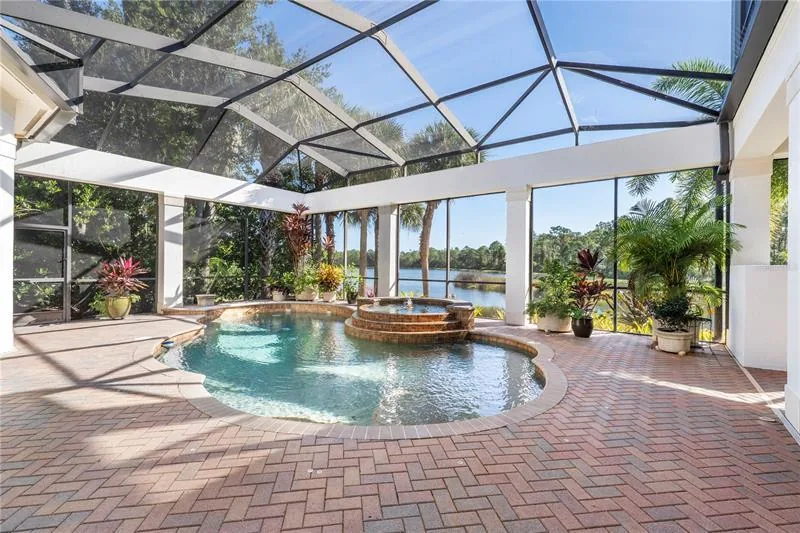
The lanai deserves its own look. Screen enclosures have their own wind and corrosion issues, and the cage, fasteners, door hardware and screen condition are worth an inspector's attention. The pool and lanai maintenance page covers upkeep, and the outdoor living page describes how those spaces are built. If an outdoor kitchen, fireplace or retractable screen is part of the lanai, each has its own electrical, gas and drainage components, and each deserves a question to the inspector: was it included in the scope?
What about stucco and moisture?
Stucco is common on Florida homes, and the question for buyers is hidden water. A veteran Florida inspector writing in the ASHI Reporter explained that cracks let water in, that water rusts and expands the wire lath behind the stucco, which causes more cracking, and that water trapped where the wall meets a horizontal surface cannot drain and attacks the wood framing. Much of the damage stays hidden until the stucco is opened. The same article points to drainage details as the thing to check: weep screeds at the base of wood-frame walls, casing beads that drain, adequate stucco thickness and the underside of horizontal returns.
A visual inspection cannot confirm hidden damage, so on a house with stucco over wood framing the practical options are a moisture meter survey, thermal imaging as a screening tool, or limited destructive testing in places the inspector chooses, with the seller's permission. A stucco specialist or a building envelope consultant is worth hiring when the house shows cracking, staining below windows or at horizontal transitions, or evidence of past repairs. Ask the seller for any record of stucco repair, repainting and window replacement, because windows are a common point of water entry.
Moisture is wider than stucco. Look for staining at ceilings below bathrooms and the roof, soft spots at window sills, musty smells in closets and garages, and condensation around air-conditioning vents. A humid climate makes the air-conditioning system part of the moisture story, since oversized or poorly set equipment can leave a home damp. Those items turn up in a general inspection as observations and can point to a more specific evaluation if needed.
What does the wood-destroying organism inspection cover?
A wood-destroying organism, or WDO, inspection is the termite report. In Florida, when a termite and WDO inspection is done as part of a real estate transaction, the findings are reported on the state's Form 13645. The UF/IFAS Extension notes that buyers should confirm that the inspector is properly credentialed, since the work is regulated and unlicensed operators have appeared in the market.
Read the form closely. It records evidence of live infestation, evidence of past infestation, and any visible damage, and it says whether treatment has been done. A past treatment is not a flaw by itself, but the date, the product used and any warranty or bond that transfers to a new owner are worth asking about. A WDO report only covers what the inspector can see, so in places such as under attic insulation or behind finished walls it cannot be conclusive.
Do you need to test the air, water or sewer?
Depending on the property, a few further items belong on a list for discussion with your agent and inspectors. Ask the inspector about the water heater age and the plumbing materials in the house. Ask the seller whether the property is on central sewer, a private system or a septic tank, and confirm with the utility provider. If a septic system is involved, ask for a dedicated septic inspection by a qualified contractor; if the property is on a utility connection, ask about the utility's fees and billing. The utilities and services page explains what to ask.
Florida requires a radon notice in sales contracts, and a buyer who wants a measurement can ask an inspector to arrange a test. Whether to test is the buyer's choice.
What about HVAC, electrical and the rest of the mechanicals?
Large homes often have multiple air-conditioning systems, sometimes on different ages and sizes. Ask for the nameplate data for each unit, the maintenance records and any history of coil, compressor or refrigerant repairs. An HVAC contractor can evaluate load, duct condition and airflow, which a general inspector does not measure. Electrical panels, generators, surge protection, landscape lighting, gates, irrigation systems and home automation may each need a specialist, and a larger house can also have a whole-house generator, a water treatment system or a smart-home hub that is not part of a general inspection. Make a list of what the house includes and ask each specialist to confirm in writing what they did and did not test. The luxury features guide is a good checklist for what a house in this price range may contain.
How should you sequence inspections inside the contract period?
The inspection period is short, and good inspectors book up. A reasonable order is the following.
- Day one: book the general inspector, the wind mitigation inspector, the WDO inspector and the pool inspector. Ask for the earliest slots, and ask for the roof evaluation to be done the same week.
- First visit: the general inspection, so that findings guide the specialist work.
- Specialist visits: roof, HVAC, pool, stucco or moisture as the general report suggests.
- Review: read every report, ask questions, and get written quotes for anything significant.
- Decision: before the period ends, accept the home, negotiate or cancel in writing, as your contract provides.
If you cannot complete the work in the time allowed, ask the listing side for an extension in writing before the deadline, not after. An oral extension is not a contract change.
How do you use the results?
Treat each report as evidence. Group the findings into three types: safety and structural items, items that affect insurability, and cosmetic or routine maintenance. Get written quotes for the first two groups. In an As Is contract, you use the findings for a price conversation or a decision to cancel. Under a Standard contract, you may have a repair request that falls inside the negotiated cost limit. The market-reading page explains how to judge whether a price adjustment is reasonable against similar sales.
Do not forget that inspection reports are also the starting point of your maintenance plan. Keep them, file them with the closing documents and use them to schedule the first-year work on the house.
Questions people ask
What inspections should I order on a large Florida home?
Most careful buyers order a general home inspection, a wind mitigation inspection, a roof evaluation, a wood-destroying organism (termite) inspection, and a pool and spa inspection if there is one. Stucco homes may warrant a moisture check of the walls, and older systems may call for a four-point report if an insurer asks for it.
Does a general inspection cover the roof and the pool?
It covers the roof covering visually, as part of a limited visual examination of readily accessible components. It does not test the structure behind finishes, and it usually does not go deep on pool equipment, pool structure or hidden stucco moisture. For those, ask for a specialist who can examine the item and write a report on it alone.
What is a wind mitigation inspection and who can do it?
It documents the features that help a home resist wind, recorded on the state's uniform mitigation verification form. Insurers use it to apply premium discounts. The inspector must be authorized under Florida law, and a completed form remains valid up to five years if the structure has not materially changed. Confirm the inspector's authorization before hiring.
Is a termite inspection required in Florida?
Whether one is done is usually a matter of the contract and the lender's rules, so ask your agent and lender. When a termite and wood-destroying organism inspection is performed as part of a real estate transaction, Florida requires the findings to be reported on the state's Form 13645.
Can I skip inspections if I am paying cash?
You can, but the inspection period under the contract is the buyer's contractual chance to review the home and, in many contracts, to cancel and recover the deposit. A cash buyer has no lender requiring reports, so the choice of reports is entirely the buyer's. After the inspection period ends, ordering a report later usually needs the seller's permission.
Sources checked
- Florida Statutes 468.8311, home inspection definitions (Florida Senate)
- Florida Statutes 515.27, residential pool safety feature requirements (Florida Senate)
- Wind mitigation resources and OIR-B1-1802 (Florida Office of Insurance Regulation)
- Premium discounts for hurricane loss mitigation (Florida Department of Financial Services)
- Your wind inspection (Citizens Property Insurance)
- Choosing a licensed wood-destroying organism inspector (UF/IFAS EDIS)
- Florida's Stucco Disaster, Part 1 (ASHI Reporter, 2016)
- What is a 4-point inspection (Slide Insurance)
- As Is vs Standard contract (Barnes Walker)


Want to see The Concession in person?
A private tour takes about an hour and covers the community, the lots and the homes that fit what you are looking for.