Owning a Pool and Screened Lanai in Southwest Florida
A Florida pool needs regular water testing, circulation, filter and equipment care, and a plan for storms. CDC guidance calls for pH between 7.0 and 7.8 and at least 1 ppm free chlorine in a pool, with at least 3 ppm in a hot tub. A screen enclosure adds frame, screen and fastener upkeep. Ask sellers for service invoices and have the pool, equipment and enclosure inspected.
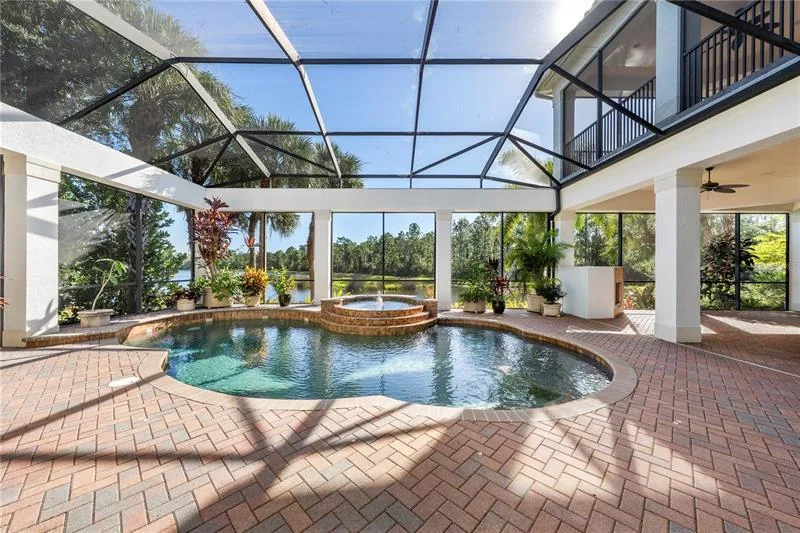
The pool and the screened lanai are the part of a Southwest Florida home that gets used most and thought about least, right up to the first service bill or the first storm. They are not complicated, but they are mechanical, chemical and structural all at once, and each side has a routine. This page lays out those routines, what a buyer can verify and what to ask, with guidance from the Centers for Disease Control and Prevention, UF/IFAS Extension and Florida's building and pool safety rules. It gives no prices, because pool costs depend on the size, age, equipment and the vendor, and any figure here would be invented.
For how pools and outdoor rooms fit the design of homes in the community, see outdoor living and lanais and luxury features explained. This page is about upkeep.
What does a pool actually need week to week?
Four things keep a pool healthy: sanitizer, balance, circulation and filtration, and debris removal.
Sanitizer and balance. The CDC's guidance for home pools and hot tubs, dated May 2024, sets the reference values. Keep pH between 7.0 and 7.8. Keep free chlorine at least 1 ppm in a pool and at least 3 ppm in a hot tub. If the pool uses cyanuric acid as a stabilizer, or a product that contains it such as dichlor or trichlor, keep chlorine at least 2 ppm, and note that disinfection takes longer when cyanuric acid is present. Do not use cyanuric acid or those products in a hot tub.
Testing. The CDC advises testing chlorine and pH at least twice a day, and more often when many people are using the water, because swimmer waste, dirt, sunlight and the mist from hot tub jets all lower chlorine. A DPD test kit is the most accurate, test strips are less so, and very high chlorine, above 10 ppm, can bleach the DPD result and give a falsely low reading. Many owners will not test twice a day by hand, so ask what the house actually does: an automated system, a service that tests on each visit, or the owner with a kit.
Circulation and filtration. Water has to move through the filter for the chemistry to work, and the pump's run time is usually set to the pool's size and the season. UF/IFAS stresses the same principle in its storm advice: keep the pump and filter running while power is available to circulate water and catch blown-in debris. Skimmer baskets, pump baskets and the filter itself need regular cleaning, and the interval depends on trees, season and use.
Debris. In Florida, debris is a year-round item. Oak and palm leaves, pollen and blown-in material fall into the water, and the screen enclosure catches much of it. Clear the skimmer basket and bottom drain so circulation continues.
Should a buyer plan on a weekly pool service?
Many owners hire a weekly service, and many seasonal owners rely on one. Others handle routine care themselves. Both work. The point is to know which the current owner uses and what that costs. Ask the seller for the last twelve months of invoices and any repair tickets, and ask whether the service covers chemicals, filter cleaning and equipment checks or only skimming and testing. That record is a better estimate of annual cost than any generic range, and it feeds the budget on the cost of ownership page.
For a second home, the question is what happens when nobody is there. An unattended pool needs the same chemistry and circulation as an occupied one, so a service and a person who can respond to an equipment failure or a storm are part of the arrangement. The second homes and seasonal living page covers that.
What is different about a spa or heated pool?
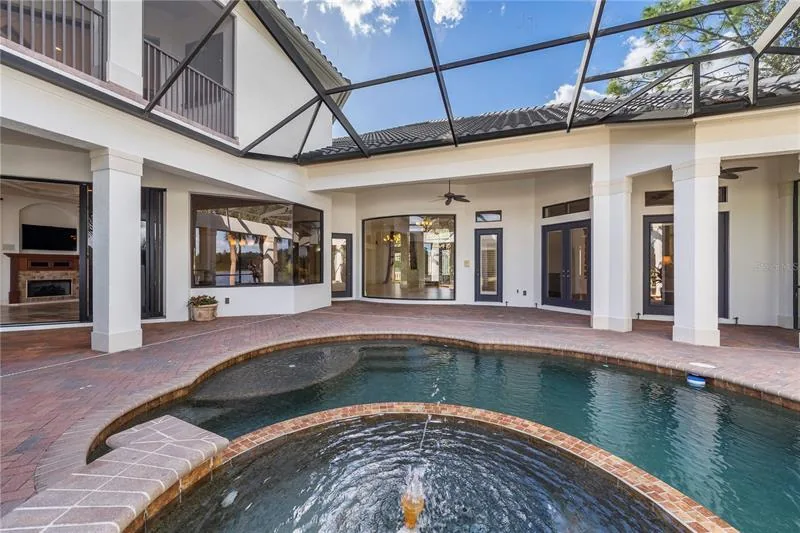
A spa or hot tub runs hotter, holds less water, and the CDC's numbers reflect that: free chlorine at least 3 ppm rather than 1, and no cyanuric acid. A spa attached to a pool is usually a separate chemical zone in practice, even when it shares equipment, so ask how it is managed.
A heater adds an equipment type, an energy cost and a maintenance item. The questions are simple. What type is it, how old is it, what fuel does it use and where does that fuel come from, and has it been serviced? For propane or gas, see the utilities page for what a buyer should confirm about supply at a Lakewood Ranch address. A buyer who wants a heated pool in winter should understand the running cost from the seller's utility history before assuming it.
What are the common construction and finish questions?
Pools in this market are commonly built with a concrete shell and an interior finish, and the age and type of that finish affects how long before resurfacing. A buyer cannot assess that by looking, so a pool professional's inspection is the tool. The areas to review are:
- Shell and finish. Cracks, rough or stained patches, loose tile at the waterline, and signs of leaks.
- Plumbing. Leaks in the lines, the valves and the equipment pad.
- Equipment. Pump, filter, heater, chlorinator or salt system, automation controls and lighting, with their ages.
- Electrical safety. Bonding and grounding, ground-fault protection and the condition of any outdoor wiring, which an electrician should confirm.
- Deck and coping. Cracks, uneven sections and drainage that sends water toward or away from the house.
- Water features and lighting. Fountains, waterfalls, sun shelves and LED systems, each with its own pump or controller.
- Automation. What it controls, who set it up, and whether the seller can transfer app accounts.
A general home inspection may include only a limited look at the pool, so confirm in writing what the inspector will and will not check. The luxury home inspections page describes what a more thorough inspection sequence includes.
What does the screen enclosure need?
A screened enclosure, often called a lanai or pool cage, is a lightweight frame covered in screen mesh. It keeps insects and debris out, and it is also a structure that wind loads, so it is both a comfort feature and an upkeep item.
Routine care covers the frame, the screens, the fasteners and the doors. Look for corrosion on the aluminum, loose or missing fasteners, sagging or torn screens, bent members after a storm, and doors that no longer latch. Debris and standing water can hasten wear, and pressure washing near the pool needs care, since UF/IFAS warns that dirt, fertilizers and other residues can cause algae and damage equipment.
On wind, the Florida Building Commission's 2012 Screen Enclosures Workgroup report is useful background. The Legislature tasked the group with recommending an alternative design method that lets a designer account for removing, retracting, opening or cutting part of the screen during high winds. Under the proposed method, the frame requires signed and sealed, site-specific engineering. Removable, retractable or cuttable panels must be removed, retracted or cut when winds are forecast to exceed 75 mph, the operation must not require ladders or scaffolding, and the permit documents must identify which panels are involved. The contractor must give the owner and the building department written notice of that duty.
That report is a 2012 committee document, and its final adoption date is stated inconsistently within it, so treat it as background, not as a statement of the rule that applies to a particular enclosure. The practical takeaway is a question for the seller: was the enclosure designed to a plan that expects screens to be removed or cut in a storm, and if so, who does it and how? If the answer is that the owner must act, the owner needs a plan for it, especially if the home is empty during hurricane season. The hurricane preparedness page covers the rest of that planning.
Questions about an enclosure:
- Was it permitted, and can the seller supply the permit and the engineered drawings?
- How old is it, and has it been rescreened, repaired or replaced after a storm?
- Are there any panels designed to be removed or cut in high wind, and what is the procedure?
- How does the homeowners policy treat the enclosure, and is it covered for wind? The homeowners insurance page explains what to ask.
- Does the community's declaration require approval for replacement or changes? See renovations and architectural review.
How should a pool be prepared for a hurricane?
UF/IFAS Extension Indian River County gives a clear sequence, and it matches the plain logic of the situation.
Before. Keep the pool full. Draining it risks pump damage if the rain does not arrive, and a partly drained pool can crack or suffer plumbing and electrical damage when saturated soil pushes on it. Shocking the pool beforehand can help limit algae and bacteria if flooding occurs. Do not put furniture, statues or other items in the pool, since chemicals and metal reactions can corrode them and stain the surface. Avoid trimming plants into the pool or pressure-washing toward it.
During. Keep the pump and filter running as long as power lasts. Water rising to the top edge of the pool is acceptable if the deck is graded to shed it away from the house.
After. Check for hazards first, including downed power lines and wildlife such as alligators or snakes. Remove debris soon, since it stains. When the surrounding area is mostly dry, lower the water to about mid-tile or halfway up the skimmer, directing the hose carefully, and never leave a draining pool unattended. Retest the chemistry and shock again as needed. Shocking removes bacteria and algae, not fertilizers or other chemicals, and the guidance is to wait the period a pool technician recommends before swimming. Pool service may be delayed after a major storm, and removing major debris yourself can lower cleanup costs.
One more point on water. UF/IFAS advises against filling a pool with reclaimed water, and Manatee County's reclaimed water page lists filling swimming pools among uses that are not allowed. See utilities, internet and services for how reclaimed water works.
How should pool chemicals be stored and handled?
The CDC's pool chemical safety guidance applies at home as well as at public pools. Keep each chemical in its own dedicated place and keep incompatible chemicals apart so they cannot mix. Store them in original, labeled containers and replace damaged ones. Keep the area cool, below 95 degrees Fahrenheit, dry and out of direct sun and humidity, away from heat and ignition sources, and secure it so children and animals cannot enter. Ventilate the storage area and pump room. Prevent mixing during handling: the CDC example is to flush water through chlorine feed lines before cleaning them with acid. Clean up spills immediately.
In a Florida garage or equipment shed in summer, the temperature threshold is worth checking, because an unventilated space can run hot.
What are Florida's pool safety requirements?
Under section 515.27 of the 2026 Florida Statutes, a residential pool must meet at least one listed safety feature to pass final inspection and receive a certificate of completion. The options are an isolation enclosure meeting the barrier requirements in section 515.29, an approved safety pool cover, exit alarms on every door and window with direct access from the home to the pool, rated at least 85 dB(A) at 10 feet, self-closing and self-latching doors with the release at least 54 inches above the floor, or a pool alarm certified to ASTM F2208 that sounds when someone enters the water. Wearable alarms do not count.
That statute governs new construction. A buyer of an existing pool should ask what safety features are in place, whether the final inspection record exists, and whether any change to the pool or the enclosure would trigger a new review. A screened enclosure can serve as an isolation enclosure only if it meets the barrier standard, and the 2012 workgroup report notes that when an enclosure serves as a required barrier, its minimum height has to be maintained even when panels are moved.
What should a buyer do before closing?
- Ask for twelve months of service invoices, repair records and equipment ages.
- Hire a pool professional to inspect the shell, plumbing, equipment and electrical safety, and an inspector or contractor to check the enclosure.
- Request permits and drawings for the pool, the enclosure and any later additions.
- Check the wind mitigation form and the insurance treatment of the enclosure.
- Ask the association about rules for pool changes, heaters, fencing and enclosure replacement.
- Plan who services the pool on day one, and who acts before a storm.
None of this is exotic, and most of it is easy to verify when requested early. A pool that is well documented, with clear records, is a pleasure to own. One with unclear history is a project.
Guidance on this page comes from the sources listed and was read in November 2026. Pool and enclosure rules differ by jurisdiction and change, so confirm any requirement with Manatee County's building department and licensed professionals.
Questions people ask
What chemical levels should a residential pool hold?
The CDC's home pool guidance says to keep pH between 7.0 and 7.8 and free chlorine at least 1 ppm in a pool, or at least 3 ppm in a hot tub. If a stabilizer such as cyanuric acid is used, keep pool chlorine at least 2 ppm. Test at least twice a day, with a DPD kit being more accurate than strips.
Should I drain my pool before a hurricane?
No. UF/IFAS Extension advises keeping the pool full, because draining it, even partly, risks pump damage if rain does not arrive, and a partly drained pool can crack or suffer plumbing and electrical damage when surrounding soil becomes saturated. Keep the pump running while power lasts, and lower the level only after the area has mostly dried.
Can I fill my pool with reclaimed water?
No. Manatee County lists filling swimming pools among the uses not allowed for reclaimed water, and UF/IFAS also advises against it. Reclaimed water is for irrigation, and uses beyond irrigating landscaping, plants and turf require a special use permit. Fill the pool from the potable supply, and ask the county about the address if you are unsure which system serves it.
What should a buyer inspect on a pool and screen enclosure?
Have a pool professional check the shell and finish, plumbing, pump, filter, heater, automation and electrical bonding, and have the enclosure's frame, fasteners, screens, doors and any permits reviewed. Ask the seller for service records and any repair history. A general home inspection may not cover the pool in depth, so confirm scope beforehand.
Does a pool need a safety barrier in Florida?
Under section 515.27 in the 2026 statutes, a new residential pool must meet at least one listed safety feature to pass final inspection: an isolation enclosure, an approved safety cover, exit alarms on doors and windows with pool access, self-closing and self-latching doors, or a certified pool alarm. Existing pools and local rules may differ, so ask the building department.
Sources checked
- CDC, Home Pool and Hot Tub Water Treatment and Testing (May 2024)
- CDC, Pool Chemical Safety
- UF/IFAS Extension Indian River County, Pools and Hurricanes
- Manatee County, Reclaimed Water
- Florida Statutes 2026, section 515.27 (residential swimming pool safety features)
- Florida Building Commission, Screen Enclosures Workgroup Report (May 2012)
- Florida Department of Financial Services, Premium Discounts for Hurricane Loss Mitigation
Want to see The Concession in person?
A private tour takes about an hour and covers the community, the lots and the homes that fit what you are looking for.