Preserves, Lakes and Wildlife in The Concession
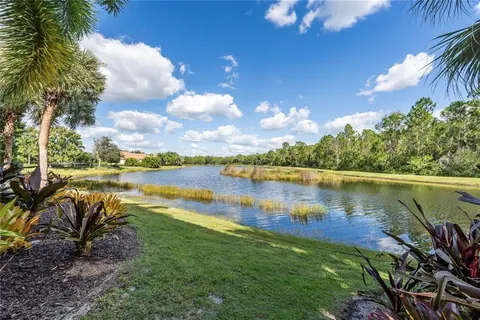
The Concession sits among oaks, pines, lakes and protected wetlands, and its design manual bars owners from clearing vegetation in conservation areas. Expect typical Florida wildlife near the water, including alligators, sandhill cranes and wading birds. Feeding alligators and sandhill cranes is illegal, and gopher tortoises are state-protected. Confirm any conservation easement on a specific lot.
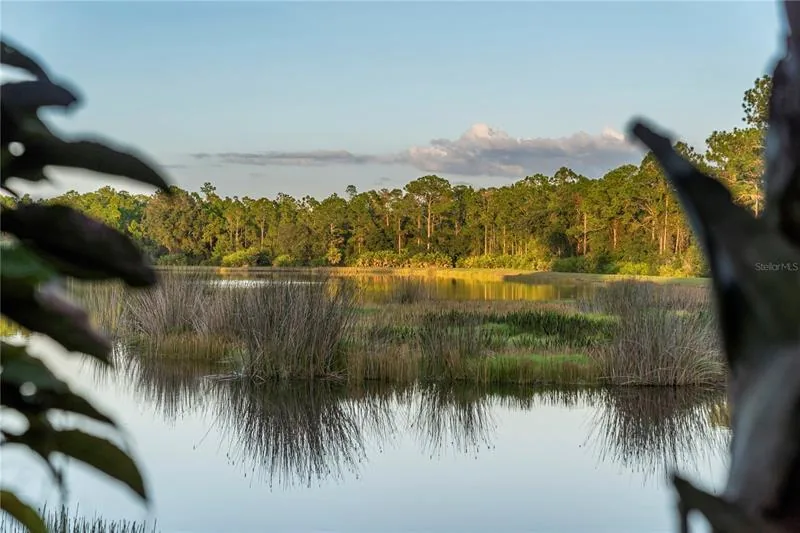
People who buy in The Concession often name the setting before they name the house: oaks and pines, long views over water, preserve land at the back of the lot. That setting is real and it comes with rules and neighbors that do not pay dues. This page covers what the sources say about the natural landscape, which wildlife a resident in this part of Manatee County should expect, and the practical obligations that come with owning land next to water and protected habitat.
It describes habitats and regulations. It does not claim to know which animals live on any given lot, because no public survey of the community's wildlife was found. Species discussed here are those that Florida wildlife agencies and university extension services say are common in Southwest Florida's lakes, wetlands and suburban landscapes.
What does the landscape consist of?
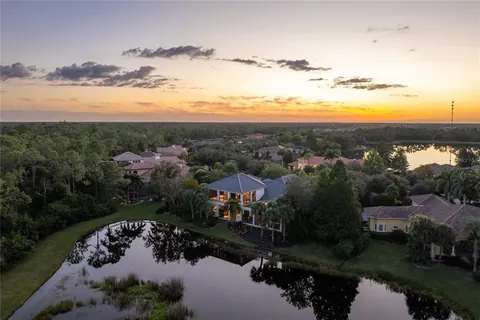
Developer and press descriptions agree on the main ingredients. Sports Illustrated, in a 2017 profile, described land with old oaks, tall pines and protected wetlands, and noted that the homes are hard to see from the golf course. Golf Course Architecture, visiting in early 2008, noted native plants and trees as a notable feature and described native scrub on parts of the golf course. The golf course itself, according to Sarasota Magazine, covers 527 acres without houses, and crews cleared thousands of palmettos from it in preparation for the 2026 tournament to improve sightlines. A listing for 8305 Farington Court describes a lakefront lot on The Concession's water body with views of an oak hammock and preserve.
An oak hammock is a stand of hardwood trees, usually live oaks, on slightly higher ground, and in Florida it often sits beside wetlands. A conservation area is land set aside under a recorded easement or permit so that it stays undeveloped. The two often overlap in a community like this one, but they are different things, and which applies to a lot is a question for the plat and the survey. The neighborhoods page explains how to pull both.
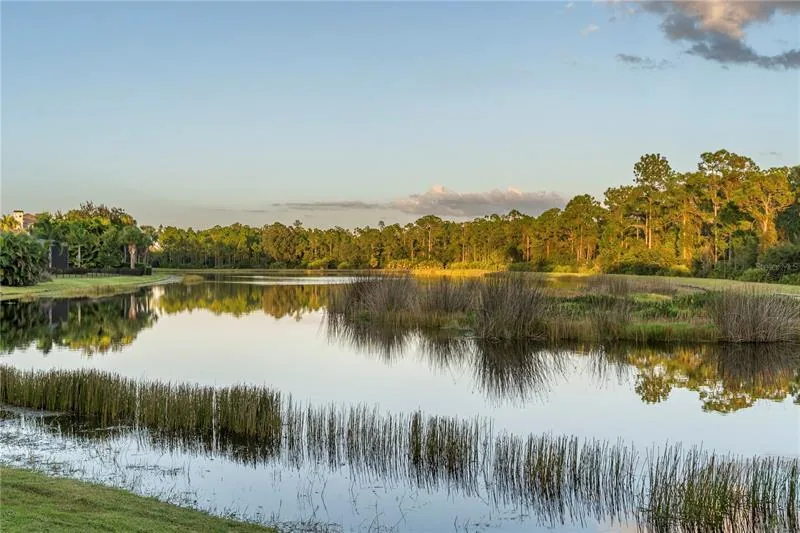
The lakes are largely stormwater ponds and lakes that serve the community's surface water management system, which the design manual says all drainage must follow. In Florida, many such lakes are built to hold and treat runoff, and they differ from natural lakes in how they are managed. The flood zones and lakefront page covers flood and elevation questions, and the lot types and views page covers what a lot can look onto.
What do the community's own rules say about preserves and lakes?
The most specific document found is the Design Standards Manual for The Concession Residences, amended and restated in October 2015. It is the manual used by the architectural review committee, and it may have been revised since, so treat what follows as a dated description to verify. Its provisions relevant to the natural setting include:
- Conservation areas. They are dedicated for protection, and owners may not clear any vegetation within the conservation easement. Owners with wetland frontage are told to preserve wetlands and limit disturbance. Clearing in naturalized areas, common areas or conservation areas requires approval from the Manatee County Environmental Protection Department, with notice to the review committee.
- Rear-lot trees. Existing trees four inches or larger in diameter within 25 feet of the rear lot line must be preserved, and may be relocated or removed only under stated conditions, including replacement planting.
- Lake banks. Lakefront rear yards follow a shared planting design near the top of the bank, with at least three bald cypress, three cabbage palms and twenty-five dwarf fakahatchee grass or spartina. The last 10 feet next to the lake must remain clear and sodded, because the community needs it for lake maintenance.
- Shorelines. Sand beaches are not allowed except for naturally occurring sand.
- Plants. Invasive and state-listed exotic plants are prohibited, native plants are generally acceptable, and each lot needs at least three trees of 3-inch caliper from a listed set. Certain mulches, including rubber, recycled pallet and most dyed mulches, are not allowed.
- Water use. Homeowners may not use the community's common-area irrigation system, and retention pond water may not be used for irrigation. Private wells are allowed only for outdoor irrigation.
- Fences near preserves. Beyond the rear of the home, only picket-style bronze aluminum or wrought iron fences are allowed, and they may not materially harm a neighbor's preserve or lake view.
- Lighting. Exterior lighting requires approval, landscape lighting should be soft and diffused, intrusive light can be ordered corrected, and colored lamps are not allowed except temporary holiday lights. Outdoor lighting rules matter for wildlife as well as neighbors.
The manual does not address docks, fertilizer, pesticides or wildlife, and it does not specify wetland buffer widths. Those are governed by county and state rules and by the association's other documents. The renovations page describes how review works for changes to a home.
Which wildlife should a resident expect?
Alligators
Alligators live in nearly any fresh or brackish water in Southwest Florida, according to UF/IFAS Extension in Sarasota County. They move between water bodies and sometimes cross roads, yards and golf courses, and they bask on banks. Their movement increases from March through June, and females guard nests during that period and will hiss or open their mouths to warn intruders.
The legal and practical points are consistent across sources. Feeding alligators is illegal, and the FWC calls it dangerous. The FWC says to keep pets on a leash and away from the water, to limit swimming to designated areas and daylight hours, and to call the Nuisance Alligator Hotline, 866-FWC-GATOR (866-392-4286), about alligators of four feet or more that are believed to threaten people, pets or property. UF/IFAS adds that many communities and HOAs prefer residents to notify the management office as well. An alligator that approaches a person or pet in the water may have been fed by someone, which is the reason feeding matters.
Sandhill cranes
Florida sandhill cranes stand nearly four feet tall and are common in suburbs and on golf courses, according to the FWC. Intentionally feeding them has been illegal since 2002, and the FWC warns against accidental feeding such as spilled birdseed. Fed cranes can lose their fear of people and approach closely, peck at windows and shiny cars, and are more likely to be hit on roads. The agency's suggestions include covering reflective surfaces, temporarily covering screens and accepting some lawn digging, since cranes eat mole crickets and grubs.
Gopher tortoises
Gopher tortoises are listed as Threatened by the State of Florida, and handling or relocating one is illegal without an FWC permit. Burrows average about 15 feet long and 6.5 feet deep and can be longer. FWC says most residential lawn and landscape maintenance does not need a permit provided it does not collapse burrows or harm tortoises, but a relocation permit is required before construction that disturbs a burrow. For an owner, that matters most when clearing a lot or building a pool, and the permit is the builder's job to arrange.
Bald eagles
Florida has about 1,500 nesting pairs of bald eagles, which the FWC describes as one of the densest concentrations in the lower 48 states. Eagles were removed from the federal endangered species list in 2007 and from Florida's imperiled list in 2008, but remain protected under the Bald and Golden Eagle Protection Act, the Migratory Bird Treaty Act and a state rule. If a nest is near a lot where work is planned, the agency's nest management pages and a qualified biologist are the right sources for buffer distances, which this guide does not state.
Other animals
Wading birds, turtles, fish and small mammals are typical of Florida lake and wetland edges, and snakes occur wherever there is cover. The FWC and UF/IFAS pages used for this guide do not list Concession-specific sightings, so none are claimed. A resident who wants a local list can ask the association, the golf club's grounds staff or the county's extension office.
How do fertilizer and lawn care affect the water?
Lakes in a community like this receive runoff from lawns, and nutrients feed algae. Manatee County has had a seasonal ban on fertilizers containing nitrogen or phosphorus for more than a decade. WUSF reported in June 2026 that the ban began June 1 and runs through September 30, that the county typically issues warnings before fines and that it focuses on education. The article does not state setback distances from water, so check the county ordinance.
The design manual requires weekly lawn service and monthly tree and shrub service, which means most owners work through a contractor. Ask the contractor to confirm that its products and timing comply with the county ordinance, and ask the association whether it has stricter rules near lakes.
How does the calendar shape life next to the water?
Several of the sources above attach dates to behavior or rules, and putting them side by side gives a rough seasonal picture. This is a summary of what the sources say, not a forecast.
- March through June: alligators are more mobile as they court, mate and nest, according to UF/IFAS, so extra care near banks and ponds is reasonable in those months.
- June 1 through September 30: the county's seasonal fertilizer ban on nitrogen and phosphorus products applies, as reported in 2026.
- Year round: feeding rules for alligators and sandhill cranes apply at all times, and gopher tortoise burrows are protected whenever they are found.
Eagle nesting dates and buffer guidance are not stated on the FWC page used here, so any work near a suspected nest should start with the agency's nest management resources. The FWC also lists a wildlife interaction reporting form and a wildlife alert page for reporting violations and emergencies.
How does the preserve affect building a pool, a fence or an addition?
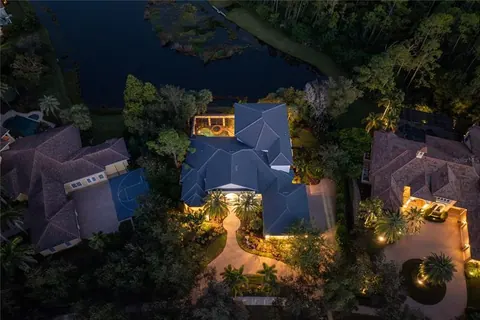
For a home already built, the practical effects show up at the back of the lot. A pool, a screen enclosure or a new fence has to respect the easements on the plat, the review committee's standards, the county's permitting rules and any conservation easement. The design manual's approval steps put the committee's review ahead of the county building permit, and its fence rules limit the style and set a five-foot minimum setback from side and rear lot lines. A lot that backs onto preserve may have fewer options than one that backs onto another yard, and the survey will show which.
Contractors are the usual point of failure. Clearing vegetation to stage equipment or to build a pool can cross a conservation line without anyone intending it, and the owner can be held responsible. Ask a prospective contractor how they handle protected areas, and put the boundary on the site plan before work starts. The pool and lanai page covers the construction and upkeep side.
What should a buyer check on a preserve or lakefront lot?
- The survey and plat, to see whether any conservation easement, wetland or buffer touches the lot.
- The declaration and the current design manual, for planting, fence and shoreline rules.
- The 10-foot lake maintenance strip and who may enter it.
- Whether any permit conditions, such as a county or water management district permit, restrict work near the water.
- Whether the association has a wildlife policy or a procedure for reporting nuisance animals.
- How lake levels behave in the dry season and after storms. The hurricane page covers storm behavior.
Wetland protections in Manatee County have been the subject of recent public debate, and county rules have changed in recent years. For that reason, rely on current county records for any specific lot, and treat summaries, including this one, as a starting point.
Where else in the area is there open space?
The community's own preserves are private. For public parks and trails nearby, see the sports, parks and recreation page, and for the community as a whole, return to the guide to The Concession.
Questions people ask
Are there alligators in The Concession's lakes?
Alligators live in nearly any fresh or brackish water body in Southwest Florida, according to UF/IFAS Extension in Sarasota County, and a lake community should expect them. They are most active March through June. Never feed them, keep pets leashed and away from the water's edge, and call the FWC Nuisance Alligator Hotline at 866-392-4286 only for animals over four feet that threaten people, pets or property.
Can I clear trees or plants on a preserve lot?
Not in a conservation area. The community's 2015 design manual says owners may not clear vegetation within a conservation easement, and clearing in naturalized or conservation areas needs approval from Manatee County's Environmental Protection Department, with notice to the architectural review committee. The manual does not state buffer widths, so check your survey and plat, and confirm which version of the manual is current.
Is it legal to feed sandhill cranes or alligators?
No. Florida made it illegal to intentionally feed sandhill cranes in 2002, and the FWC warns against accidental feeding such as spilled birdseed. The FWC and UF/IFAS both state that feeding alligators is illegal and dangerous. Fed animals lose their fear of people, which is a main reason they end up being removed.
What do I do if I find a gopher tortoise burrow on my lot?
Leave it alone and do not collapse it. Gopher tortoises are state-listed Threatened, handling or moving them is illegal without an FWC permit, and a relocation permit is required before development or construction disturbs a burrow. FWC says routine lawn and landscape maintenance generally needs no permit if it does not harm tortoises or collapse burrows.
When can I fertilize my lawn in Manatee County?
Manatee County has a seasonal ban on fertilizers containing nitrogen or phosphorus from June 1 through September 30, which was in effect again in 2026, according to WUSF. Rules can change and may include setbacks near water. Check the county's current ordinance and any additional restrictions in the community's design manual or association rules before applying products.
Sources checked
- Sports Illustrated, The Gesture That Created a Community
- The Concession Design Standards Manual (October 2015)
- FWC, American Alligator
- FWC, Tips for living with alligators (bulletin, March 2018)
- UF/IFAS Extension Sarasota County, Alligator Encounters (June 2024)
- FWC, Gopher Tortoise
- FWC, Bald Eagle
- FWC, Sandhill Cranes
- WUSF, Seasonal fertilizer ban in the Tampa Bay region (June 2026)
- Golf Course Architecture, The Concession
- Sarasota Magazine, A Major Moment (March 2026)
- Listing record, 8305 Farington Court
Want to see The Concession in person?
A private tour takes about an hour and covers the community, the lots and the homes that fit what you are looking for.