Homeowners Insurance for a Concession Home: Wind, Roofs and Premiums
Florida homeowners policies cover wind but carry a separate hurricane deductible, expressed as a percentage of the dwelling limit and applied once per calendar year. Premiums depend on the roof, wind features verified by a mitigation inspection, and the insurer. Flood is excluded and bought separately. Get quotes for the specific address, including the hurricane deductible, before the inspection period ends.
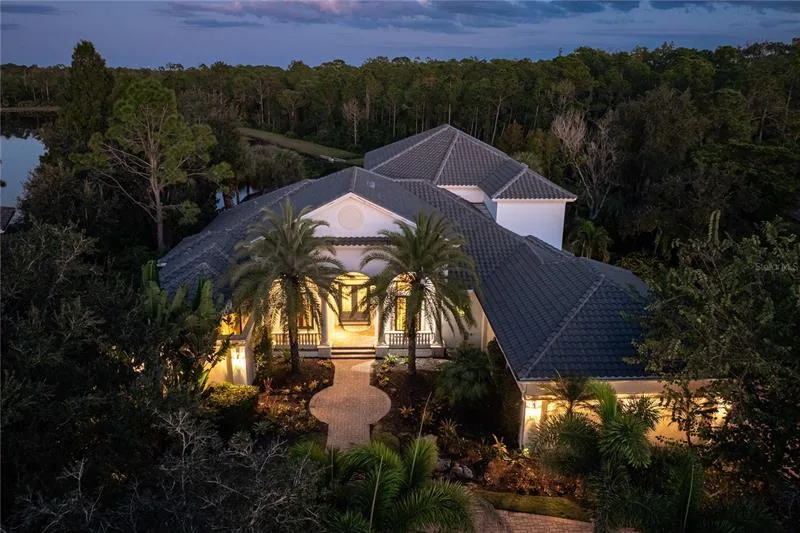
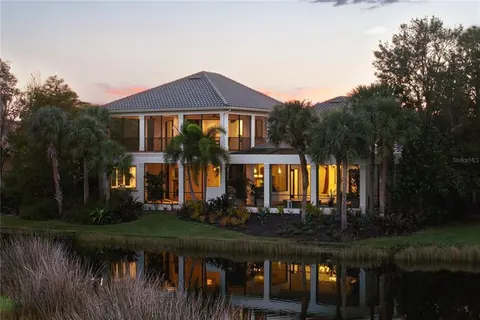
A house on a lake in Bradenton, built of block and stucco under a tile roof, sits in one of the more closely watched insurance markets in the country. The risk that dominates the pricing is wind. The questions a buyer has to settle are therefore specific: what the insurer will charge to cover wind, what the buyer pays out of pocket after a storm, and whether the house itself is documented in a way that earns credit.
This page explains how Florida homeowners coverage is built and where the large decisions sit. It uses the state's own sources, the Office of Insurance Regulation, the Department of Financial Services and the 2026 Florida Statutes, and it does not quote premiums. Rates depend on the address, the construction, the buyer and the insurer's appetite at the moment of the quote, so any number printed here would be wrong for most readers.
What does a Florida homeowners policy cover?
According to the Department of Financial Services, a typical policy covers the dwelling, attached structures, certain unattached structures and personal property, plus additional living expenses and liability, all subject to the policy limits. Some categories, including jewelry, firearms, art and antiques, have special sub-limits, and sewer backup may be excluded but can be added by endorsement.
For a large home, the first review is about the numbers on the declarations page:
- Dwelling limit (Coverage A). This is the amount the insurer will pay to rebuild. On a custom home with specialty finishes, a limit tied to a generic price per square foot can fall short. Ask how the insurer arrived at the number and whether it is replacement cost or something less.
- Other structures, personal property and loss of use. These are often set as percentages of the dwelling limit, so ask whether a change to the dwelling limit moves them.
- Liability. A pool, a lakefront and guests argue for a higher liability limit, and an umbrella policy is a separate purchase.
- Special sub-limits. Wine, art, jewelry and collections often need scheduled coverage.
- Water damage terms. Policies differ on how they treat non-weather water damage, so ask for the actual wording.
- Ordinance or law coverage. After a major loss, code upgrades can add cost. Ask how much of that the policy covers and whether it is a percentage or a fixed amount.
These are questions for the agent, and the answers belong in writing. A buyer who compares quotes should compare them on the same limits, the same deductibles and the same endorsements, since two quotes with different dwelling limits are not really comparable. If an agent will not put a limit's basis in writing, that is information too.
How do hurricane deductibles work?
Section 627.701 of the 2026 Florida Statutes sets the rules. For personal lines homeowners policies, insurers must offer hurricane deductibles of $500, 2 percent, 5 percent and 10 percent of the dwelling limit. The statute attaches conditions to the $500 option, so it is not offered in every case, and a 3 percent option may replace the 2 percent option for dwellings from $1 million up to, but not including, $3 million.
Two features matter more than the percentages.
The deductible is annual. For personal lines policies the hurricane deductible applies on an annual basis to all covered hurricane losses within a calendar year, across policies from the same insurer or insurer group. Once part of it has been used, a later storm in the same year is subject to the remaining deductible or the non-hurricane deductible, whichever is greater.
It is a percentage of the dwelling limit, not of the loss. On a high-value home, even the lowest percentage option translates into a substantial dollar amount, and that amount is paid by the owner before the policy responds. Treat it as cash that must be available after a storm. A buyer who thinks of insurance as a monthly line and forgets the deductible is only looking at half the cost.
The statute also describes an optional secured hurricane deductible, available by mutual agreement with a certificate of security. Under it, the first $500 of a claim is fully deductible, the next $5,000 of hurricane losses is insured with a 10 percent copayment, and the remainder is subject to a percentage deductible of up to 10 percent of the dwelling limit. Insurers cannot require it. Separately, policyholders who take qualifying mitigation measures may get a lower hurricane deductible or a premium discount.
For the plan around a storm itself, including shutters, supplies and post-storm steps, see hurricanes and The Concession.
What is a wind mitigation inspection?
The Office of Insurance Regulation describes the Uniform Mitigation Verification Inspection Form, numbered OIR-B1-1802, as the form an inspector completes during a wind mitigation inspection. A new version took effect April 1, 2026. The inspector must be authorized under section 627.711(2)(a), Florida Statutes, and the Office encourages consumers to confirm authorization before hiring one. The completed form stays valid for up to five years as long as the structure has no material changes and the form has no inaccuracies.
The Department of Financial Services lists the features that can earn discounts:
- Roof covering. Shingles, tile or metal panels that meet the Florida Building Code standard in force, or a reinforced concrete roof deck.
- Roof deck attachment. Nail size and spacing that match code.
- Roof-to-wall connections. Clips, single wraps or double straps.
- Opening protection. Shutters or impact-rated glazing, rated at an intermediate or hurricane level.
- Secondary water resistance. A barrier between the roof covering and the deck that limits water entry if the covering is lost.
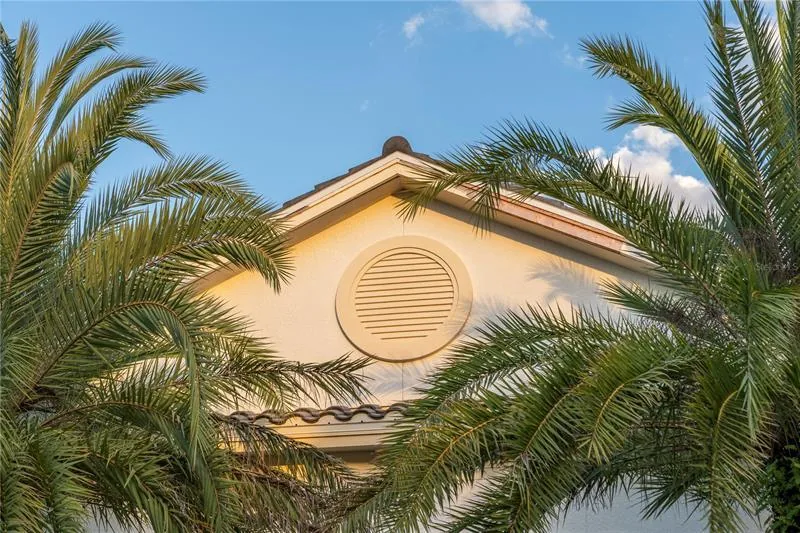
- Roof shape. A hip roof, which slopes on all sides, is described as the most wind-resistant shape.
Qualified inspectors include licensed home inspectors who completed the required training and passed an exam, general, building or residential contractors, licensed engineers or architects, and certified building code inspectors. The agent or insurer can supply a list.
For a buyer, the practical steps are: ask the seller for any existing form and its date, check it against the five-year validity and the form revision, and decide whether to order a new inspection during the due diligence period. The cost is small relative to the premium difference that a good result can make, but only an agent's quote shows the actual effect for that insurer.
How do the roof and construction type affect coverage?
The Department of Financial Services' list shows what the state treats as the load-bearing features. Underwriters can be expected to look at the same items on the form, and some insurers may ask separately about the roof's age and condition. The details differ by insurer and change often, so the safest approach is to ask each carrier's agent directly what it requires.
Manatee County's emergency management page adds useful context on how the building code has changed over time. It says homes built after March 2012 were required to withstand 150 mph winds, homes built from March 2002 to March 2012 were required to withstand 130 mph, and homes built before March 2002 were built to 110 mph on the coast or as low as 90 mph in some inland areas. It adds that if a roof was replaced, it likely meets newer codes, and that a wind mitigation report can confirm a home's rating. For a buyer comparing a recent build with an older resale, that is a reason to read the date of construction and the roof's replacement history side by side. The new construction versus resale page covers that comparison, and the homes and architecture page describes common construction in the community.
Questions that belong in a pre-offer conversation with an agent:
- What is the roof's covering, age and most recent replacement date, and does the insurer have a minimum remaining life?
- Does the house have impact glass, shutters or neither, and are all openings covered, including sliding doors and garage doors?
- Does a pool enclosure count toward or against anything, and how does the policy treat it? See pool and lanai maintenance.
- Has the house had prior claims, and what was repaired?
- What do the wiring, plumbing and air conditioning systems look like? Ask the agent whether the carrier wants information on them for a home of this size.
Private market, Citizens and surplus lines: what is the difference?
Florida homeowners coverage comes from three places.
Admitted private insurers are the standard market. Ask the agent whether a carrier is licensed to write admitted business in Florida, and compare that answer with the surplus lines point below.
Citizens Property Insurance Corporation is the state-created insurer of last resort. Its Clearinghouse program, required by section 627.3518 of the Florida Statutes, helps applicants who think Citizens may be their only option see whether private insurers will offer coverage. Under the criteria Citizens published, a new personal lines applicant qualifies if no private insurer will offer coverage at its approved rates, or if the private premium is more than 20 percent higher than the comparable Citizens premium. The bulletin stating the 20 percent threshold is dated June 14, 2021, and it replaced a 15 percent threshold, so the current rule should be confirmed with an agent.
Surplus lines insurers write coverage for risks that standard insurers decline, such as some coastal homes. The Florida Surplus Lines Service Office, which publishes a consumer guide, says plainly that the Florida Insurance Guaranty Association does not guarantee unpaid claims from surplus lines companies, so it will not help pay a policyholder if a surplus lines insurer cannot meet its obligations. The same guide notes that regulation of the surplus lines industry is maintained through the licensing of surplus lines agents. A buyer offered a surplus lines policy should ask the agent to explain the insurer's financial strength and what the policy form says.
High-value homes sometimes fall outside what the standard market writes at the limits needed, which is why buyers of larger properties meet surplus lines and specialty carriers more often than the average Florida homeowner. That is a normal part of the market, and the answer is to understand the trade-offs, not to avoid it by default.
What does flood insurance have to do with this?
Nothing in a standard policy, and that is the point. The Department of Financial Services states that standard homeowners policies do not cover flood, and a separate flood policy is needed. Insurers may also exclude windstorm coverage in some circumstances, in which case wind-only coverage can be bought from Citizens or the private market.
Because many hurricane losses involve storm surge or rain, flood and wind coverage are best planned together. The flood zones and lakefront page explains zones, elevation certificates and lender rules. A buyer who is financing should ask the lender what it requires. The jumbo loans and cash offers page covers how financing choices affect the insurance steps, and a cash buyer, who has no lender requiring coverage, still faces the same exposure.
How are claims handled, and what are the deadlines?
The Department of Financial Services states that initial and reopened property claims must be reported within one year of the loss and supplemental claims within 18 months. For windstorm or hurricane claims, the periods run from landfall or from when the windstorm caused the damage. Insurers must acknowledge claim communications within 7 days and pay or deny a claim within 60 days.
Good practice, whatever the policy, is to photograph and video the home and its contents before hurricane season, keep records outside the house, report damage promptly, and keep receipts for emergency repairs and temporary housing. The hurricane preparedness page lists the steps.
There is one more item for financed purchases. The Department notes that if a lender fails to pay the premium from escrow and the policy is canceled, the insurer should reinstate coverage without a lapse if the premium arrives within 90 days of the renewal date. A borrower should still check each year that the renewal premium was paid.
What should a buyer do before the inspection period ends?
- Ask the listing team or seller for the current policy declarations, the claims history and any wind mitigation form.
- Have an independent agent quote at least the private market and, if needed, a surplus lines option, using the specific address and stating the hurricane deductible and the dwelling limit.
- Order or update a wind mitigation inspection if the existing one is old or the form revision has changed.
- Obtain a flood determination and a flood quote at the same time.
- Compare the premium and the deductible as one number, for example the annual premium plus the dollar amount of the percentage deductible.
- Do not waive the due diligence period before the binder is in place. A policy that cannot be issued before closing is a problem to know about early.
For the full set of costs this line sits among, see the cost of ownership hub, and for what an inspector reviews at the house, see luxury home inspections.
Statutes and agency pages cited here were read in November 2026. Insurance rules and company appetites change frequently, so confirm every item with a licensed Florida agent.
Questions people ask
How does the hurricane deductible work in Florida?
Under section 627.701 in the 2026 statutes, personal lines insurers must offer hurricane deductibles of 2, 5 and 10 percent of the dwelling limit, with a 3 percent option allowed in place of 2 percent for dwellings of $1 million to under $3 million. The deductible applies annually, so a second storm in the same calendar year draws on whatever remains of it.
What is a wind mitigation inspection and is it worth getting?
It is an inspection documented on the state's uniform mitigation verification form that records roof covering, deck attachment, roof-to-wall connections, opening protection, secondary water resistance and roof shape. Insurers must post their mitigation discounts, and the completed form stays valid for up to five years if nothing material changes. Ask the agent to price the home with and without it.
Does homeowners insurance cover flood damage from a hurricane?
Not under a standard policy. Florida's Department of Financial Services states that standard homeowners policies do not cover flood, and rising water from storm surge or heavy rain generally falls under a separate flood policy. The National Flood Insurance Program offers residential limits of $250,000 for the building and $100,000 for contents, and private flood coverage can offer other limits.
What is Citizens Property Insurance and when can a buyer use it?
Citizens is Florida's state-created insurer of last resort. Under the rule Citizens published in 2021, a new applicant qualifies if no private insurer offers coverage at its approved rates, or if the private premium is more than 20 percent above the comparable Citizens premium. Rules change, so ask an agent to run the current Clearinghouse check.
How long do I have to report a hurricane claim?
The Florida Department of Financial Services says initial and reopened property claims must be reported within one year of the loss, and supplemental claims within 18 months. For windstorm or hurricane claims the periods run from landfall or from when the windstorm caused the damage. Insurers must acknowledge claim communications within 7 days and pay or deny within 60 days.
Sources checked
- Florida Statutes 2026, section 627.701 (hurricane deductibles)
- Florida Office of Insurance Regulation, Wind Mitigation Resources
- Florida Department of Financial Services, Premium Discounts for Hurricane Loss Mitigation
- Florida Department of Financial Services, Homeowners Insurance Overview
- Citizens Property Insurance, Clearinghouse
- Citizens Property Insurance, Rule for new business eligibility (June 14, 2021)
- Florida Surplus Lines Service Office, Understanding Florida's Excess and Surplus Market
- Manatee County Emergency Management, Evacuation Levels
Want to see The Concession in person?
A private tour takes about an hour and covers the community, the lots and the homes that fit what you are looking for.