What It Costs to Own a Home in The Concession
Owning in The Concession means paying association dues, Manatee County property tax, homeowners and often flood insurance, utilities, and upkeep for a pool and lanai. Golf and club memberships are separate and optional. Dues and taxes can be read from documents; insurance and tax after a sale must be quoted for the specific home and buyer.

Most buyers of a home at this level start with the price and treat everything after it as a rounding error. In a gated Gulf Coast golf community the rounding error is large enough to matter. The annual cost of holding a house here is a stack of separate charges that come from separate parties: an association, a county, an insurer, a utility, a pool service and, for some owners, a club. Each one is set by a different rule and can be checked in a different place.
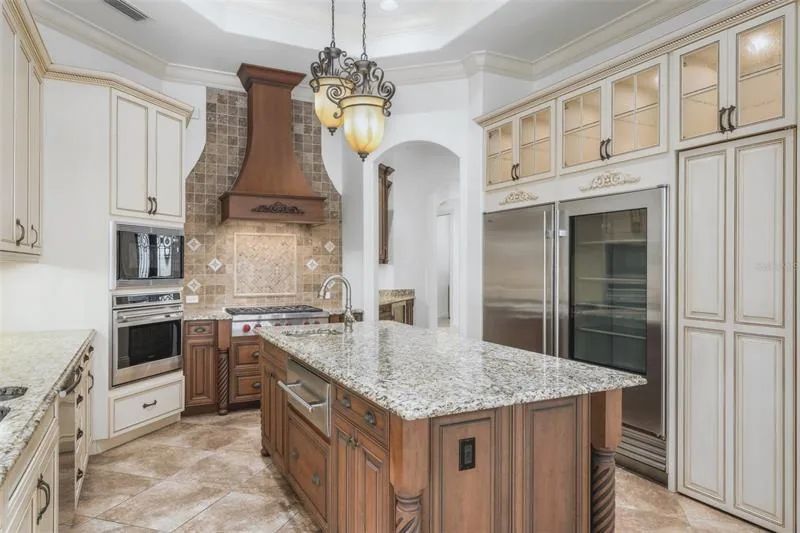
This page is the hub for those costs. It walks through each category, explains who decides the number and when it changes, and points to the detailed page for each one. It uses one real property as a worked example, the lakefront estate at 8305 Farington, because the listing carries actual figures. Where a number has not been verified from a primary source, the page does not guess. It says what to request and from whom.
What do the listing figures for 8305 Farington show?
The listing data for 8305 Farington shows homeowners association and club charges of about $2,583 per quarter. Multiplied out, that is roughly $10,332 a year, or about $861 a month. The same data shows taxes of $1,496 per month, which is about $17,952 a year. No community development district charge is stated, and golf and club memberships are described as optional.
Three cautions apply to those figures, and they apply to any listing.
First, the dues figure is a snapshot. Associations adopt a new budget each year, and the board can change what it bills. The number that matters is the one on the current budget and the current fee schedule, which a buyer can ask for in writing.
Second, the tax figure reflects the current owner's assessment and exemptions. A purchase can change the assessed value, and in Florida it often does. The mechanics are covered on the property taxes and homestead page, but the short version is that a listing's tax figure is a starting point, not a forecast of the first bill after closing.
Third, "no CDD stated" is not the same as "confirmed none." A community development district, or CDD, is a special-purpose local government that finances roads, drainage and similar infrastructure through assessments that appear on the property tax bill. Florida law requires a disclosure in first-sale contracts inside a CDD, but a resale buyer should simply read the tax bill and the title commitment. If the line items on the bill show only the usual county, school and special-district charges, there is no CDD in the picture.
How the costs are organized
It helps to sort costs by how often they arrive and by who controls them.
| Cost | How often | Who sets it | Where to verify |
|---|---|---|---|
| Association dues | Quarterly in the listing example | Association board, through an annual budget | Current budget, fee schedule, estoppel certificate |
| Property tax | Once a year, bill mailed around November 1 | Manatee County taxing authorities, based on the Property Appraiser's value | Property Appraiser record, Tax Collector bill |
| Non-ad valorem assessments | Same bill as property tax | The district or authority named on the bill | Line items on the tax bill |
| Homeowners insurance | Annual or in installments | Insurer, within filed rates | Quotes for the specific address |
| Flood insurance | Annual | NFIP or private insurer | Flood zone, elevation data, quotes |
| Water, sewer, garbage | Monthly | Manatee County and its waste haulers | Utilities account setup, current rates |
| Electric, internet, propane or gas | Monthly | Providers | Provider quotes, past bills |
| Pool, lanai, landscape and irrigation care | Monthly or per visit | Service vendors | Seller's invoices, vendor quotes |
| Golf and club membership | Per the club's schedule | The club | Membership office, written schedule |
The rest of this page works through those rows in the order a buyer tends to meet them.
What are the one-time costs of buying?
Beyond the price itself, a closing in Florida involves several charges that a buyer should ask the title company to itemize before the contract deadline, not at the closing table.
Documentary stamp tax. Florida levies this tax on deeds and on written obligations to pay money, such as promissory notes and recorded mortgages, and it is collected by the clerk of court when the document is recorded. The Department of Revenue page confirms the tax exists and where it is paid. Who bears it in a given deal is a matter of the contract and local custom, so ask the title agent to show the rate applied and which side is paying. A cash purchase has no mortgage note to tax, which is one place the closing statement differs from a financed one.
Title insurance and settlement fees. These are quoted by the title company handling the closing. Request a written estimate early so that the number is not a surprise.
Inspection costs. A home with a pool, a screened lanai, a tile roof and a stucco exterior is inspected more thoroughly than a standard house, and some of those inspections come from specialists. The luxury home inspections page covers what each one looks at. Budget for the wind mitigation inspection discussed below as well, because it feeds the insurance quote.
Association paperwork. Florida's statute on estoppel certificates caps what an association can charge for the certificate at $250 when no delinquency exists, with an extra $100 allowed if the buyer wants it delivered within three business days. The 2026 statutes also say fees adjust every five years with inflation, so confirm the current cap. Separately, many associations charge a one-time transfer, capital contribution or move-in fee that is set by the governing documents rather than by statute. The HOA page explains where to find it.
Club initiation. If the buyer wants a golf or social membership, the initiation or transfer arrangement is a separate transaction with the club, not part of the real estate closing. See membership for how that process works and what to request from the club.
Moving and setup. Utility deposits, a first pool service visit, and any hurricane hardening the buyer decides to do belong in the first-month budget too.
What do association dues pay for?
The listing example shows about $2,583 per quarter for the association and club-related charges combined. What that buys depends on the governing documents and the annual budget. Typically it covers the cost of maintaining the community's common property, the gated entry, and whatever shared services the declaration provides. The specific scope, and whether the number includes anything beyond the association itself, should be read from the budget rather than assumed.
Florida law gives the buyer real tools here. The association must prepare an annual budget that lists operating costs, expected revenue and the projected surplus or deficit. Fees for recreational amenities have to be itemized separately in the budget, whoever owns the amenity. A buyer can request official records, and the association has 10 business days to make them available once the request is in writing. The details, along with how reserves and special assessments work, are on the HOA fees page. For how the gate and entry operation relate to the cost, see gated security and entry.
One practical point: quarterly billing means a closing date can fall mid-quarter. The title company normally prorates the dues, but ask who is billing the quarter in progress and whether anything is prepaid.
How is the property tax bill figured, and what will it be?
Florida taxes real property on a calendar-year assessment date of January 1. The Property Appraiser sets the market value and applies any exemptions and caps to reach the taxable value for each taxing authority. Each authority multiplies its taxable value by its millage rate, where one mill is one dollar per thousand dollars of taxable value, and the results are added together with any non-ad valorem charges.
The Manatee County Property Appraiser's materials describe a cycle that begins with the January 1 assessment, mails notices of proposed taxes in August, and has the Tax Collector mail bills around November 1. Taxes are paid in arrears, so the bill in November covers the year that is ending. Paying in November earns a 4 percent discount.
For a buyer, three points drive the real number:
- The exemption status resets with ownership. Homestead exemption belongs to a person, not a property. A buyer who makes the home a permanent residence and files by March 1 can qualify for the following tax year. A buyer who does not occupy it as a permanent residence does not.
- The cap restarts. The Save Our Homes cap limits annual increases on homesteaded property, and the 10 percent cap applies to certain non-homestead property. A constitutional amendment approved in November 2026 is reported to change both from 2027, so confirm the current rules with the Property Appraiser. After a sale, assessed value generally returns to full market value on January 1 of the next year and a new cap period starts.
- The bill is paid in arrears and prorated at closing. The Tax Collector's guidance says taxes should be prorated at closing and that ownership records may lag a year, so the tax bill might still carry the seller's name.
All of that is explained in the property taxes and homestead page, including how a second-home buyer is treated differently from a full-time resident.
How does insurance fit into the monthly cost?
For many buyers at this price point, insurance is the most variable line. A homeowners policy in Florida is priced on the location, the construction, the age and type of the roof, the wind features verified by an inspection, the coverage amount and the deductible structure. Insurers must offer hurricane deductibles expressed as percentages of the dwelling limit, and for dwellings of $1 million to under $3 million a 3 percent option may replace the 2 percent option. A percentage deductible on a high-value dwelling is a large dollar figure, which is why buyers should model it as a cost they might actually pay.
The Florida Department of Financial Services notes that standard homeowners policies do not cover flood. Flood coverage is a separate policy, available from the National Flood Insurance Program or from private insurers. The NFIP's residential limits, as published on FloodSmart, are $250,000 for the building and $100,000 for contents, which can fall short of the rebuilding cost of a large home. Buyers of high-value homes often look at private or excess flood coverage in addition to, or instead of, the federal policy.
The homeowners insurance page covers wind, roofs, Citizens Property Insurance Corporation and the surplus lines market. The flood zones and lakefront page covers the flood side. Both come with the same advice: get quotes for the specific address before the inspection period ends, not after.
What about utilities and everyday services?
Water, sewer and garbage service for addresses served by Manatee County Utilities are set up under a residential account. The county lists a $165 deposit for a standard individually metered single-family account, credited after two years of on-time payments. Electric service comes from the utility serving the address, and a new account can usually be opened online with a start date. Internet and cable are provider-specific, and availability should be checked address by address.
Manatee County's March 2026 solid waste notice lists a standard residential curbside rate for unincorporated areas of $23.65 per month, made up of separate trash, recycling and yard waste charges. Confirm that this program applies to the address, since service arrangements depend on how a community is organized. The utilities, internet and services page explains how to start each service and what to ask.
Irrigation deserves its own line. Lawns and landscape beds in this climate use a great deal of water, and the county applies watering restrictions that vary by address. Reclaimed water, where it is available, is priced differently from potable water and can serve irrigation only. Ask the seller what the irrigation bills actually were.
What does a pool and lanai add?
A pool and a screened enclosure, called a lanai or pool cage, are standard in this market, and they carry ongoing costs: chemicals, a weekly service or a diligent owner, equipment repair and replacement, heater and spa operation, screen repair and periodic enclosure maintenance, plus a larger electric bill when pumps and heaters run. None of these is large on its own. Together they are a real line in the annual budget.
The pool and lanai maintenance page explains the routines and what to inspect. A seller's service invoices for the last year are the best available estimate of what the pool costs to run, and a buyer is entitled to ask for them.
What other costs get overlooked?
- Landscape and grounds. The cost depends on lot size, the plant palette, and whether the association maintains any of it. Ask which exterior items are the owner's responsibility under the governing documents.
- Architectural review for changes. A renovation, a new lanai or a pool resurfacing can require approval before work starts, and an approval process can add time and professional fees. See renovations and architectural review.
- Hurricane readiness. Shutters, impact glass, generator fuel and post-storm cleanup are real expenses in a year with a storm. The hurricane preparedness page covers the planning side.
- Maintenance reserve. Roofs, air conditioning systems, pool equipment and exterior paint all wear out on a predictable clock. An owner who sets money aside every year does not feel a replacement as a shock.
- Time and travel costs for a second home. A property left empty during summer still needs service, monitoring and an agent with keys. The second homes and seasonal living page is the place for that.
How do golf and club costs work?
Golf and club memberships are optional and priced separately from the association dues. The club sets the initiation structure, the periodic dues and any minimum spending or assessment, and those terms can differ by membership category. The listing treats them as optional, and the safest approach is to request the current schedule in writing from the club's membership office and to ask whether any category is currently available. The golf club and clubhouse and amenities pages describe what exists; the membership page describes how to ask.
What changes for a buyer who will use the home part of the year?
A second-home buyer pays the same association dues, the same insurance premium structure and the same tax rates, but loses a few things a permanent resident can claim. The homestead exemption requires the owner to make the property a permanent residence by January 1 and to file by March 1, so a seasonal owner generally pays tax on a larger taxable value and is exposed to the 10 percent cap on non-homestead property instead of the Save Our Homes cap. Insurers may also apply different terms to a home that sits unoccupied for long stretches, so tell the agent how the home will be used when asking for quotes. A pool service, lawn care and a person who can reach the house after a storm all become line items. Those costs are manageable when planned and annoying when discovered after closing.
How often do these numbers change?
Association dues change when the board adopts a budget, usually once a year. Property tax changes every year with the Property Appraiser's value and each authority's millage; the notice of proposed taxes arrives in August, which is the last chance to react before the bill. Insurance renews annually and can move for reasons unrelated to the house, such as an insurer's own exposure. Utility rates change by county action. Club dues change by club decision. Because nothing on this list is frozen, the cleanest habit is to build the budget with a cushion and to review each line when its notice or renewal arrives.
What should a buyer request before relying on any number?
Use this checklist during the inspection or due diligence period of the contract:
- The current association budget, the fee schedule and the most recent financial report.
- An estoppel certificate showing the account status and any amounts owed or pending.
- The recorded declaration and any amendments, plus rules about leasing, vehicles, exterior changes and pools.
- The last two or three years of tax bills for the property, and the Property Appraiser's record showing exemptions and assessed value.
- Written insurance quotes for the address, including the hurricane deductible, and a copy of the seller's wind mitigation inspection if one exists.
- The flood zone determination and any elevation certificate on file, with a flood quote.
- Twelve months of utility, irrigation and pool service bills.
- The club's current membership schedule, if a membership is wanted.
- A title commitment showing no special assessments or districts that are unaccounted for.
Each of those documents comes from a different party, which is why the due diligence period matters. A buyer who requests them on the first day has time to read them.
How should a buyer build a realistic annual budget?
Start with the fixed items you can read from documents: association dues, club dues if any, and the last full tax bill. Then add the items that must be quoted: insurance and flood coverage. Then add the items that come from history: utilities, irrigation, pool and landscape service. Finally add a maintenance reserve and an allowance for the hurricane deductible, treating the deductible as a contingency rather than a premium.
Work the number two ways. Use the listing's figures, for example $10,332 a year in association and club charges and $17,952 in taxes for the 8305 Farington example, as one scenario. Then rebuild the tax line using the assumption that the home is purchased and the assessed value resets, because the second figure is the more realistic one for a new owner. Insurance and flood are then added from real quotes. That gives a range rather than a single hopeful number.
The advice is plain and not specific to this community: the total cost of owning a large Florida house is more than the sum of its listing figures, and the difference is closed by reading documents, not by estimating.
Costs and rules in this guide change. Figures from sources are labeled with their dates, and everything else should be verified with the association, the county, the club and the insurer before relying on it. To understand the community that these costs support, start with The Concession overview.
Questions people ask
How much are the HOA fees in The Concession?
The listing data for 8305 Farington shows combined HOA and club charges of about $2,583 per quarter, roughly $10,332 a year. Other homes can differ, and the board can change the budget each year. Request the current budget, fee schedule and an estoppel certificate from the association for the specific address before relying on any figure.
Are golf and club memberships included in the association dues?
The listing describes golf and club memberships as optional, which means they are priced and contracted separately from the association dues. The club sets initiation terms, periodic dues and any minimums by membership category. Ask the club's membership office for the current written schedule and for which categories are open.
Will my property tax bill match the seller's?
Not necessarily. Homestead exemption belongs to the owner, not the property, and the Save Our Homes cap restarts under a new owner. The seller's bill shows the seller's exemptions and capped value. After a sale, assessed value generally returns to market value on January 1 of the following year, so ask for a projection built on the purchase price.
Does homeowners insurance cover flood?
No. Florida's Department of Financial Services states that standard homeowners policies do not cover flood, so it is a separate policy. The National Flood Insurance Program offers up to $250,000 for a residential building and $100,000 for contents, and private insurers offer other limits. Check the flood zone and get quotes before the inspection period ends.
What one-time costs come up at closing besides the price?
Expect title insurance and settlement fees, documentary stamp tax on the deed and any mortgage note, recording charges, inspections, the association estoppel certificate fee (capped by statute at $250 for a current account in the 2026 statutes), and any transfer or capital fee in the governing documents. Ask the title company for a written itemized estimate early.
Sources checked
- Florida Department of Financial Services, Homeowners Insurance Overview
- Manatee County Property Appraiser, Exemptions and Save Our Homes
- Manatee County Property Appraiser, TRIM supplement
- Manatee County Tax Collector, Property Tax General Information
- Florida Statutes 2026, section 720.30851 (estoppel certificates)
- Florida Statutes 2025, section 190.048 (CDD purchaser disclosure)
- Florida Statutes 2026, section 627.701 (hurricane deductibles)
- Florida Department of Revenue, Documentary Stamp Tax
- FloodSmart (FEMA), Buy a Flood Insurance Policy
- Manatee County, Set Up a New Utilities Account
- Manatee County, Rates for Solid Waste and Recycling Services (March 2026)


Want to see The Concession in person?
A private tour takes about an hour and covers the community, the lots and the homes that fit what you are looking for.