Lake, Preserve and Golf Views: Choosing a Lot in The Concession
Concession homesites run from about half an acre to a full acre, with preserve or lake views described in published materials. Lot position changes sun exposure, privacy, what you can build near the rear line, planting duties along a lake bank and seasonal water levels. Check each lot's survey, setbacks, flood zone and orientation rather than relying on a view label.
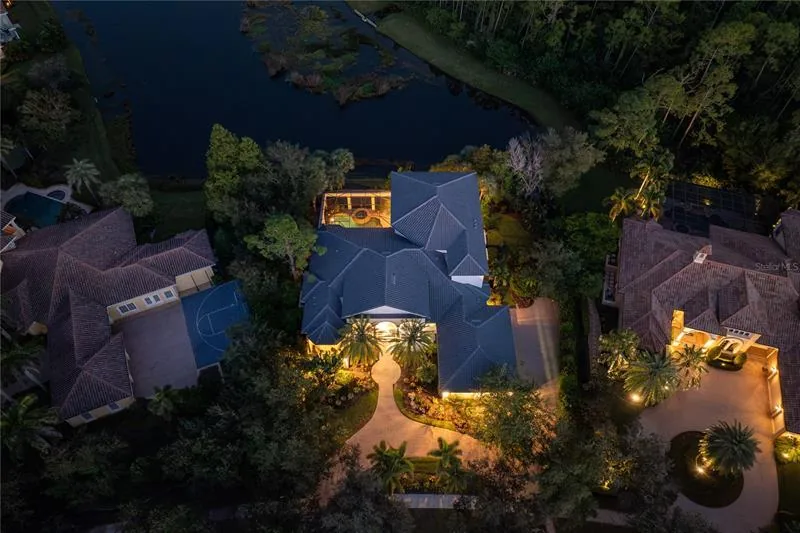
Two lots with the same acreage and the same builder can live very differently. One sits at the end of a cul-de-sac with a wooded preserve behind it and the sun setting over the side yard. The other fronts a lake that faces due west and rises and falls with the seasons. A listing photograph shows both as a green backdrop. This page explains what actually changes with position inside The Concession, drawing on the community's written design standards and public agency guidance, and ends with a way to evaluate a lot in person.
What kinds of lots are there in The Concession?
Published materials describe estate homesites of roughly half an acre to a full acre. A 2016 report from Nicklaus Design, the firm behind the golf course, counts 236 homesites and says the lots have preserve or lake views. A 2017 announcement about new model homes in the Lindrick neighborhood added that premium lots sit among oak hammocks, pines and large lakes, and that the community has private roads and no community development district fees.
So the sources we found sort lots into lakes and preserves. They do not give a count of lots that front the golf course. The design manual does refer to the golf course, for instance asking that antennas be placed to minimize visibility from it, which tells us some homes are visible from the course, but we cannot say how many or which. If a golf outlook matters, ask your agent to confirm from the plat and the survey which side of the lot faces fairways, and how close.
For a sense of how the community divides into named sections, see neighborhoods and sections.
How does a lake lot differ from a preserve lot?
Lake frontage
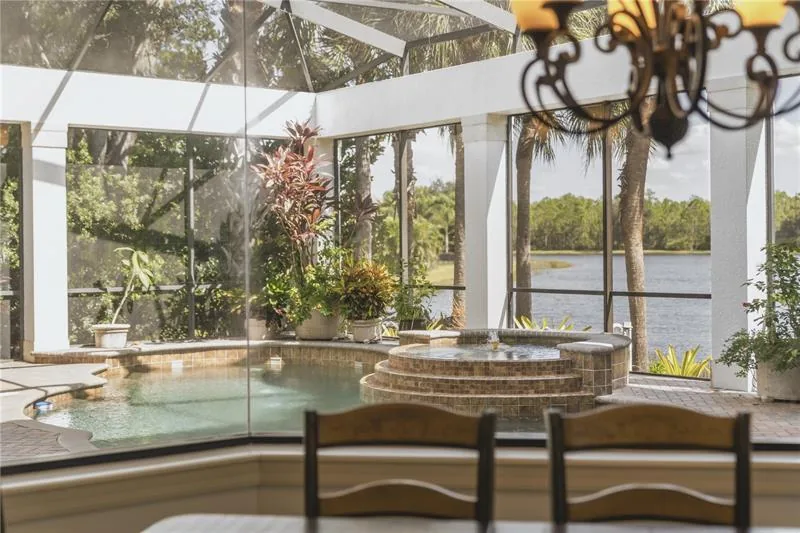
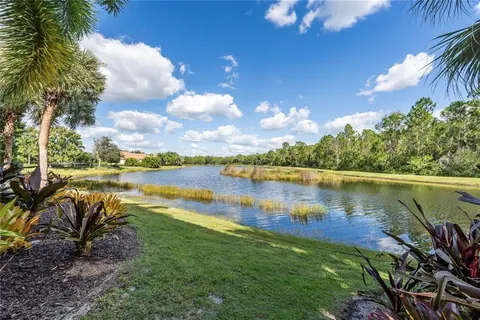
A lake lot gives the longest sight lines and the most light, and it also gives the most exposure. Wind comes across open water, the afternoon sun may hit glass hard if the lake lies to the west, and the water level moves with the seasons. The manual adds duties. For a rear yard with lake frontage, it requires planting at the top of the bank, at least three bald cypress, three cabbage palms and twenty-five plants of dwarf fakahatchee grass or spartina, and landscaping may extend to within ten feet of the rear lot line, with the remaining ten feet sodded. Lakefront aquatic vegetation follows separate approved lists. Sand beaches are prohibited except where naturally occurring or approved as shoreline work. Water from retention ponds cannot be used for irrigation.
Because those planting and shoreline rules are enforced through review, a lake lot comes with some obligations that an interior lot does not. Ask how the current owner has maintained the bank, and whether any shoreline work has approval.
Preserve edge
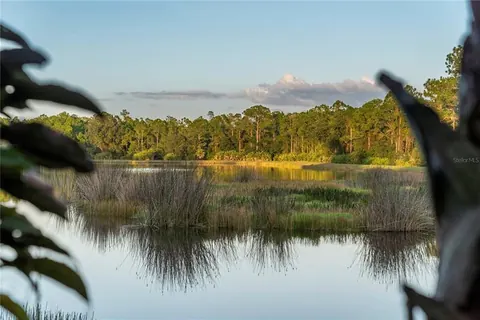
A preserve lot backs onto protected land. The manual states that conservation areas cannot be cleared, and that clearing in naturalized or common areas needs Manatee County Environmental Protection approval, with notice to the review committee. The practical consequence is that what you see behind the house is what you will keep seeing. There is no development risk from the land itself in the sense of a cleared lot next door, but the edge is wild, and our wildlife and preserves page covers what that means day to day.
The manual also guards the view from the other side. Fences beyond the rear of the home must be picket-style bronze aluminum or wrought iron so they do not materially harm preserve or lake views, and walls are not allowed there.
Interior and cul-de-sac lots
A lot without a water or preserve edge gives up the long view, and it can give back privacy from the rear because required buffer plantings do the screening. Each lot needs trees of a minimum caliper, and planted buffers run along the front, sides and rear. The side and front setbacks decide how close a neighbor can build. For a screened-in house, privacy is also about elevation: a second-story balcony sees across what a ground-level lanai does not.
What do setbacks and buffers do to the buildable area?
The manual points to an exhibit in the recorded declaration for setbacks on roofed structures, so the exact numbers are not in the design document, and we did not find them elsewhere. What the manual does state:
- Unscreened pools, patios and decks may extend to within 10 feet of the rear lot line.
- Non-roofed structures are not permitted in the side setbacks.
- Roof overhangs more than two feet above grade may extend into setbacks as the applicable codes allow.
- Variances need a written request and are granted only for hardships unique to the lot.
- Where county code imposes a greater setback, the code controls.
- Existing trees four inches in diameter or larger within 25 feet of the rear line must be kept, or relocated or replaced under the manual's terms.
- Fences and walls must be at least five feet from the side and rear lot lines.
Florida law adds one more rule that matters on corner or oddly shaped lots: under section 720.3035, each parcel has one front for setback purposes unless the governing documents say otherwise, and where the documents set no setback, county or municipal rules apply. Corner lots, however, need two front buffers under the manual, which affects how much of the lot is planted ground.
The upshot for a buyer is that acreage overstates usable space. A 0.53-acre lot such as the one at 8305 Farington has a buildable envelope smaller than the lot itself, and the part nearest the rear line is regulated for trees, planting and fences. Ask for the survey that shows setbacks, easements and the footprint of what is already built.
How do drainage, grading and irrigation vary by lot?
Water moves across every lot, and the manual treats that movement as a community system. Stormwater must drain according to the community's Master Surface Water Management System, and fences must not disrupt drainage across a lot or the subdivision. Grading around utility pull boxes and transformers has to preserve drainage. The survey submitted for final review carries master drainage compliance arrows, which show the intended flow direction, and the finished floor must meet the minimum set by Manatee County code, with higher elevations needing committee and government approval.
For a buyer, drainage questions are different on each lot type. A lakefront lot usually sheds toward the water, a preserve lot toward the preserve edge, and an interior lot toward swales and inlets. Look at the lot after a heavy rain if you can, and look for standing water, eroded mulch or sod that has been replaced repeatedly. Ask for the grading plan and the elevation of the slab relative to the street.
Irrigation also depends on position. Homeowners cannot use the community's common-area irrigation system, retention pond water cannot be used for irrigation, and irrigation wells require Manatee County approval, with wells allowed only for outdoor landscape irrigation. Sod and oaks in the right-of-way in front of a lot transfer to the homeowner's system once installed. Ask what source feeds the sprinklers at a house you are considering, and what the water bills have looked like.
What should you ask about a lot that borders the golf course?
The sources we found do not describe golf-frontage lots in detail, so we offer questions rather than claims. Where does the fairway or green sit relative to the house, and how far? Which direction does it face? How does the screened lanai or pool cage relate to the line of play? The manual's antenna rule shows that the community expects some homes to be visible from the course, and the Florida statute on association architectural control refers to areas visible from a golf course as well. Ask the club and the association whether any easements, signage rules or maintenance access routes cross the lot. Our golf club page covers the course, and a visit to the property at different times of day tells you more than a map.
How does orientation change daily life?
The Florida Solar Energy Center, a research institute at the University of Central Florida, recommends placing the largest windows on the north and south sides of a house in this climate, keeping glass off west and northwest walls, and shading any west-facing window that matters for the view. It also advises overhangs of at least two feet.
Apply that to a lot. If the water or preserve lies to the west, the best view is also the hardest wall to shade, and the lanai may be in direct sun late in the day. If the rear faces east, mornings are bright and afternoons are shaded, which many people find easier for outdoor use in summer. North and south exposures sit between. You can check orientation with a compass app on a visit, and by standing in the lanai in the late afternoon. The outdoor living page explains how designers respond to it.
What happens to the water through the year?
The Southwest Florida Water Management District says the rainy season runs about four months, June through September, and brings roughly 60 percent of the year's rain, while the dry season, about eight months from October through May, is much drier. It adds that seasonal lake level fluctuations are typical, and that lakes generally rise in the rainy season and fall during the dry season. The National Weather Service in Tampa Bay lists the rainy season for West Central Florida as running roughly from late May to mid October, with thunderstorms common almost daily, and frequent lightning, especially in July through early September.
For a lakefront buyer, that means the shoreline you see in March can look different in August. A visit in only one season gives one view. Ask for photographs from both ends of the year, and ask the seller how the bank and any dock or shoreline plantings have behaved after heavy rain and after dry spells. Our flood zones and lakefront page covers flood-zone determinations and insurance questions.
Manatee County's Building Division includes a floodplain management section, and it reviews permit and development applications for compliance with floodplain rules. Its contact for floodplain questions is Flood@mymanatee.org or 941-748-4501 extension 5871, according to the county page.
How do you evaluate a lot on a visit?
Bring a short checklist and use it at more than one time of day.
- Find the rear line. Ask where the property boundary actually runs, and compare it with the survey. Water and preserve edges are not always where they look.
- Check the sun. Note which wall faces west and what shades it. Return in late afternoon if you can.
- Walk the bank or the buffer. On a lake lot, look at the slope, the plantings and any erosion. On a preserve lot, look at the tree line and the understory.
- Look sideways. Where are the neighbors' windows, pools and lights? Buffer plantings take years to mature on newer lots.
- Read the survey. Note easements, setbacks, drainage arrows and the elevation of the slab above the road.
- Ask for the flood zone determination and any elevation certificate. Then ask the insurance questions on the homeowners insurance page.
- Imagine the project you want. If you plan a pool, a larger lanai or an addition, ask the review administrator whether the lot can accommodate it. The renovations and architectural review page explains the process.
- Test the view in season. Preserve foliage and lake levels both change, so ask for dated photographs.
What is a view worth to the buyer?
We do not put numbers on views here, and the public sources do not either. What can be said is that a view is made of the lot's position, the required buffers, the neighboring plans and the season, and a view that is a protected preserve behaves differently from a view across a lake someone else might alter. The community's rules limit fences, clearing and some planting near the rear lines, which helps keep a view as it is, though they do not guarantee anything about what a neighbor will plant or build within the rules. Ask what is on record, and compare lots by what the documents say.
Questions people ask
What is the difference between a lake lot and a preserve lot?
A lake lot backs onto open water, which brings long sight lines, wind and seasonal water-level change, and top-of-bank planting duties. A preserve lot backs onto protected natural land, which brings a wooded or marsh edge and the rule that conservation areas cannot be cleared. Both may be buffered by required landscaping. Check the survey and the recorded plat for the exact boundary.
Do lakefront lots in The Concession flood?
Water frontage does not by itself set flood risk. Risk depends on the property's mapped flood zone, the finished floor elevation, and the ground and drainage around the house. Ask for the flood zone determination and any elevation certificate, and look at the county's floodplain information for the address. Our flood zones page covers the process in more detail.
Can I build a fence along the water or preserve edge?
Only with written approval, and only certain types. Beyond the rear of the home, the 2015 design manual allows picket-style bronze aluminum or wrought-iron fences that do not materially harm preserve or lake views. Walls are not allowed there, chain link is prohibited, and fences and walls must sit at least five feet from side and rear property lines.
How far from the back property line can I build a pool?
The 2015 design manual says unscreened pools, patios and decks may extend to within 10 feet of the rear lot line, while roofed structures follow the setbacks in the declaration. A screened enclosure is a roofed structure and has its own approval, so ask the review administrator how the current rules treat your specific lot before you plan a layout.
Which direction should a back lawn face in Florida?
No orientation is universally better. A west-facing rear brings strong late-day sun and heat onto glass and lanai, while a north or south rear is easier to shade, according to the Florida Solar Energy Center's guidance. Views and privacy may outweigh orientation for some buyers. Visit at different times of day to see what the sun does.
Sources checked
- The Concession Design Standards Manual (October 5, 2015)
- Nicklaus Design: The Concession Residences wins Best Development award (April 2016)
- Patch: Concession Residences announce grand opening of three new model homes (February 2017)
- Southwest Florida Water Management District: Dry conditions, your questions answered
- National Weather Service Tampa Bay: Rainy season
- Florida Solar Energy Center: Home design priorities for hot, humid climates
- Manatee County Building Division (floodplain management)
- Florida Statutes 720.3035 (2024)
Want to see The Concession in person?
A private tour takes about an hour and covers the community, the lots and the homes that fit what you are looking for.