Weather and Seasons in Bradenton: Heat, Rain, Hurricanes and the Best Months
Bradenton has a warm, wet summer and a mild, dry winter. NOAA's 1991-2020 normals for Sarasota-Bradenton show average highs of about 72 to 75 degrees from December to February and about 90 degrees from June to September, with roughly 30 of the year's 49 inches of rain falling in those four summer months. Atlantic hurricane season runs June 1 to November 30.
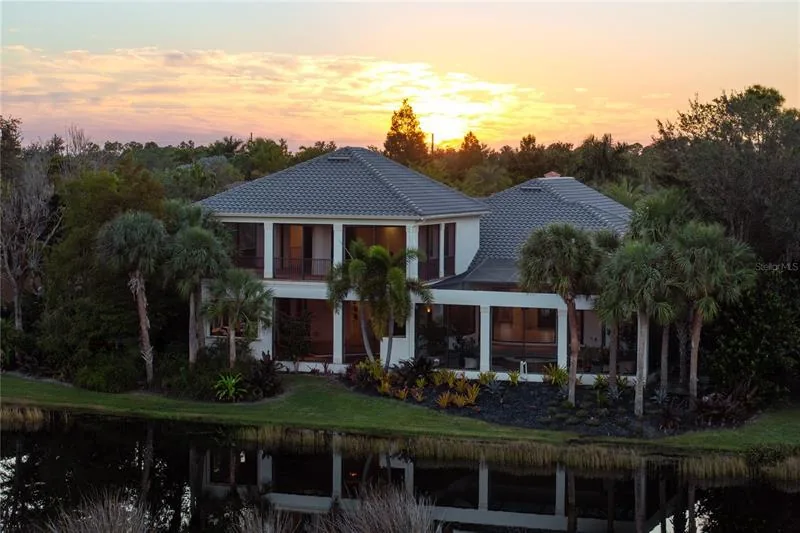
There are two weather stories on this part of Florida's Gulf coast, and a buyer should hold them separately. One is ordinary climate: how hot, wet and humid each month tends to be, which shapes what a year of living here feels like. The other is storm risk, which is lower in frequency, higher in consequence, and covered in more depth under hurricane preparedness and flood zones and lakefront. This page takes the first story in detail and gives the second story enough sourced context to place it. All numbers come from the National Weather Service, the National Hurricane Center or state agencies, and are described by the year or period they cover.
What do the temperature and rainfall normals show?
The National Weather Service's Tampa Bay office publishes 30-year normals for Sarasota-Bradenton International Airport, the closest long-record station to Lakewood Ranch. The latest set covers 1991 to 2020. Normals are averages, and any given month can run well above or below them. The station is also near the coast, so inland addresses, including those in Lakewood Ranch, can differ somewhat, and the published data does not say by how much.
| Month | Average high (F) | Average low (F) | Rainfall (inches) |
|---|---|---|---|
| January | 72.5 | 52.3 | 2.79 |
| February | 74.9 | 54.6 | 1.92 |
| March | 78.2 | 58.1 | 2.85 |
| April | 82.5 | 62.7 | 2.46 |
| May | 87.5 | 68.2 | 2.58 |
| June | 90.0 | 73.6 | 7.05 |
| July | 91.1 | 75.2 | 7.39 |
| August | 91.5 | 75.3 | 9.11 |
| September | 90.2 | 74.1 | 6.00 |
| October | 86.3 | 68.3 | 2.76 |
| November | 80.0 | 60.1 | 1.81 |
| December | 75.2 | 55.2 | 2.33 |
| Year | 83.3 | 64.8 | 49.05 |
Two features stand out. First, the temperature range is moderate: the coolest month's average high is 72.5 and the warmest month's average low is 75.3. Second, rainfall is sharply seasonal. By simple arithmetic on the table, June through September account for about 29.5 of the 49 inches, roughly 60 percent of the year's total, and the other eight months share the rest.
When is the rainy season, and what is it like?
The National Weather Service defines the rainy season as May 25 to October 10 for most of west-central Florida and May 15 to October 15 for southwest Florida, and notes that the start often comes as a gradual transition and not on a set day. Its page does not say which region Sarasota-Bradenton belongs to, so treat late May to mid-October as the working window. The service describes the season as warm and humid with frequent showers and thunderstorms, starting when storms become nearly daily over the peninsula, and describes typical conditions as dew points above 70 degrees, lows from the 70s to around 80 and highs from the upper 80s to the mid-90s.
The phases differ. According to the NWS, late May and June are when severe storms are most likely, with hail, damaging winds and waterspouts possible, July through early September is the peak, with heavy rain, river flooding and frequent lightning even as severe weather is less likely, and mid-September through early October is a wind-down with more variability from tropical systems and early cold fronts. The NWS says daily sea breezes help drive thunderstorm development.
What that means for a resident: summer days commonly bring heavy afternoon rain, golf and outdoor plans get scheduled around lightning, and pool and lanai care matters year-round. The pool and lanai maintenance page covers the practical side.
What is humidity like?
The NWS does not publish a single humidity number on the pages used here, but its rainy-season description of dew points above 70 degrees is the useful marker. A dew point that high feels heavy and sticky, and it is why the summer low temperatures stay in the 70s. The climate normals table above also lists cooling degree days, a measure of how much air conditioning demand there is, at 3,721 for the year versus 394 heating degree days, which indicates how much more the climate pushes toward cooling than heating. If you are relocating from the Northeast, the practical difference is that cooling costs and equipment matter much more than heating, a point developed on relocating from the Northeast.
What is hurricane season, and what has happened locally?
The National Hurricane Center states that the Atlantic season runs from June 1 to November 30, with a peak on September 10 and most activity from mid-August to mid-October. For 1991 to 2020 it lists an average of 14 named storms, 7 hurricanes and 3 major hurricanes across the whole Atlantic basin. Those are basin averages. They do not tell you the odds for a particular address, and no page reviewed for this guide gives one.
Two storms in 2024 are documented by the National Weather Service's Tampa Bay office:
- Helene, September 25 to 27, 2024. The storm made landfall in the Big Bend region as a Category 4 hurricane, far to the north, but significant storm surge flooded the coast from the Nature Coast southward and record water levels were set at several tide gauges. Port Manatee reached 6.04 feet above mean higher high water. Cooper Creek at University Parkway in Manatee County recorded 3.39 inches of rain, and Sarasota/Bradenton International Airport recorded a sustained wind of 44 knots with a 64-knot gust. The NWS notes that point observations may have missed peak values.
- Milton, October 8 to 10, 2024. The storm struck the west-central coast as a Category 3 hurricane. The NWS report lists 12 tornadoes, many of them before landfall, and gusts of 89 knots at Sarasota/Bradenton International Airport. Highest rainfall totals listed were around St. Petersburg, at more than 20 inches at one gauge. Port Manatee recorded 1.37 feet above mean higher high water, while the report says surge was worst south of the landfall point, with Fort Myers at 5.27 feet.
The practical takeaway is not a prediction. It is that two storms in a single season produced very different effects across the region, and effects at a given property depend on elevation, construction, distance from water and local drainage. That is why the buying questions are about the specific home: its flood zone, its roof and opening protection, and its insurance history. Those topics are covered in flood zones and lakefront and homeowners insurance.
What are red tide and sargassum?
Red tide is a harmful algal bloom, in Florida mostly of an organism called Karenia brevis. According to the state's wildlife agency, it has been documented off Florida's Gulf coast since the 1840s, usually forms in late summer and early fall and can last from a few weeks to more than a year, with the longest documented Gulf bloom lasting 31 months, from 2001 to 2004. When onshore winds carry it to a beach, people may cough, sneeze or feel eye, nose and throat irritation, and the agency advises against swimming in or around a bloom. It also notes that offshore winds usually keep effects minimal. Current status is on the agency's red tide pages, including a daily sample map, and the Florida Department of Health has health guidance.
Sargassum is a different thing: a floating seaweed, not an algal bloom, that decays on beaches and smells. The University of South Florida's Optical Oceanography Laboratory tracks the large Atlantic bloom by satellite. A June 2025 report said record amounts were recorded that May, that the Atlantic coast and Keys were expected to see more than usual and that the bloom's general path was not expected to reach Florida's west coast. That is a 2025 statement about one season, so it does not settle the question for any later year. Both red tide and sargassum are beach-condition issues, and the beaches and day trips page covers the beaches themselves.
How do I check forecasts, alerts and water conditions?
Three official sources cover most needs. The National Weather Service's Tampa Bay office publishes forecasts, rainy-season information, thunderstorm guidance and its summaries of past tropical events. The National Hurricane Center covers tropical systems and the seasonal climatology used above. For red tide, the state wildlife agency's daily sample map updates each day at 5 p.m. and lists the last eight days of samples, and its status page provides tables and maps. If you are watching a storm, rely on those sources and on Manatee County emergency management, not on social media posts or a page like this one, which describes patterns and not forecasts.
How does climate show up in the cost and care of a home?
The cooling-versus-heating degree day figures in the NOAA normals, 3,721 against 394, are the clearest numerical hint: air conditioning runs most of the year, and the equipment matters. Moisture is the other constant. A dew point above 70 degrees in summer means mildew pressure on lanais, pool decks and exterior surfaces, and the heavy summer rain tests roofs, gutters and drainage. None of that is unique to one property, but it is why buyers ask about the age of the air conditioning system, the roof, and the drainage around the house during inspection. Luxury home inspections covers what a thorough inspection looks at, and utilities, internet and services explains how to ask about electricity costs rather than guess at them.
What is each season like?
Using the sources above and nothing more:
- Winter (December to February). Average highs of about 72 to 75, lows in the low-to-mid 50s, and between 1.9 and 2.8 inches of rain per month. This is the stretch that the area's winter population and cultural season are built around, as covered under arts, culture and dining.
- Spring (March to May). Highs rise from about 78 to 88 and rain stays in the 2 to 3 inch range. Late May is the start of the NWS's rainy-season window.
- Summer (June to September). Highs near 90, lows in the mid-70s and the heaviest rain, with 6 to 9 inches per month. This is the peak of the rainy season and the front half of hurricane season.
- Fall (October and November). Rainfall drops sharply, from 2.76 inches in October to 1.81 in November, and highs fall from about 86 to 80. Hurricane season continues until November 30, and red tide can start to appear.
So which months are best?
That depends on what you value. If you want the lowest humidity and rain, the NOAA data point to November through April. If you want warm water and long evenings, summer offers them, along with heat, nearly daily storms and the peak of hurricane season. Local reporting describes winter as the busiest season, which is part of why second homes and seasonal living is a separate topic, with questions about storm preparation while the home is empty. For a first-hand test, visit once in the winter and once in August. The Lakewood Ranch guide and the getting around page show how the seasons also change traffic.
Questions people ask
What is the weather like in Bradenton by month?
NOAA's 1991-2020 normals for Sarasota-Bradenton show January averaging a 72.5 degree high and 52.3 low, April 82.5 and 62.7, July 91.1 and 75.2, and October 86.3 and 68.3. Monthly rainfall ranges from 1.81 inches in November to 9.11 inches in August. Individual years vary a great deal from these averages, so treat them as typical patterns, not forecasts.
When is hurricane season and when is it most active?
The Atlantic season runs June 1 to November 30, and the National Hurricane Center says the climatological peak is September 10, with most activity from mid-August to mid-October. The 1991-2020 average is 14 named storms, 7 hurricanes and 3 major hurricanes for the whole basin. Those are basin-wide averages, not forecasts for Manatee County.
Did recent hurricanes affect Bradenton and Sarasota?
Yes. Helene, in late September 2024, produced record high water levels at several Tampa Bay area tide gauges, including 6.04 feet above mean higher high water at Port Manatee, according to the National Weather Service. Milton, in October 2024, brought an 89-knot gust at Sarasota/Bradenton International and 12 tornadoes across the area. Property-level effects varied widely, so ask for records on any specific home.
What are red tide and sargassum?
Red tide is a harmful algal bloom, mainly Karenia brevis, that can cause coughing and eye and throat irritation when onshore winds carry it to the beach. Florida Fish and Wildlife says it most often forms in late summer and early fall and can last weeks to over a year. Sargassum is seaweed; a University of South Florida researcher said in 2025 that its main bloom was not expected to affect Florida's Gulf coast.
Which months are most comfortable for visiting or living here?
It depends on tolerance for heat and humidity. NOAA's normals show the least rain from November through May, with highs from about 72 to 88 degrees, while June through September has highs near 90 and the rainy season's frequent storms. Local reporting describes winter as the busiest season. The climate data cannot tell you which conditions you prefer, so visit in more than one season.
Sources checked
- NWS Tampa Bay: Sarasota-Bradenton monthly and annual normals, 1991-2020
- NWS Tampa Bay: Rainy Season
- NWS Tampa Bay: Thunderstorm climatology quick reference
- National Hurricane Center: Climatology
- NWS Tampa Bay: Hurricane Helene summary
- NWS Tampa Bay: Hurricane Milton summary
- Florida Fish and Wildlife Conservation Commission: Red Tide FAQ
- Florida Fish and Wildlife Conservation Commission: Red Tide
- WUWF: Record-breaking levels of sargassum are coming to some Florida beaches (June 2025)
Want to see The Concession in person?
A private tour takes about an hour and covers the community, the lots and the homes that fit what you are looking for.