New Construction vs Resale in The Concession
A new build gives current Florida Building Code construction, written warranty terms and your own selections, but adds review and construction time and depends on lot availability. A resale of about 2007 vintage is ready now and fully landscaped, with roof, air conditioning, pool equipment and finishes that need dated records. Neither is better in general; the paperwork decides.
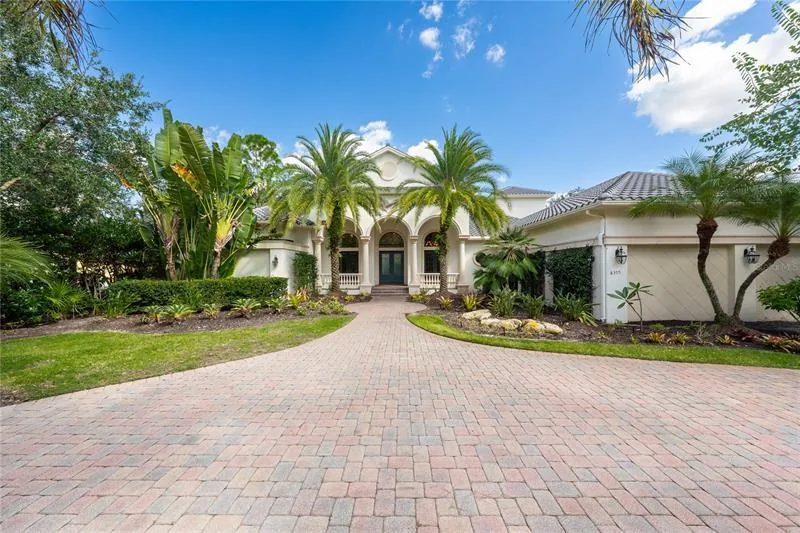
The choice between building and buying comes down to what each path gives up. A new build gives up time and certainty about the final result, because the house does not exist yet. A resale gives up customization and, in a house now nearly twenty years old, some of the freshness of its systems. Both paths in The Concession end at the same kind of property, a custom house on a half-acre-plus lot, but the risks arrive in a different order. This page lays out the trade-offs with the dates and rules that apply, then lists what to inspect in a house built around 2007, the vintage of 8305 Farington.
What are the real differences between building and buying?
| Question | New construction | Resale (around 2007 or later) |
|---|---|---|
| Lot | Depends on what is available; position, orientation and view are chosen | Fixed; landscaping and buffers are mature |
| Time to move in | Lot purchase, design, architectural review, county permit, construction | Closing timeline |
| Code | Current Florida Building Code edition at permit date | Edition in force at the original permit date, plus any later permitted work |
| Selections | Yours, with allowances and change orders | Previous owner's, possibly altered |
| Documentation | Contract, plans, selections, builder warranty | Whatever the seller, builder, county and association hold |
| Unknowns | Cost and schedule variance | Age and condition of systems |
None of those rows favors one path for every buyer. They tell you which documents and questions matter most.
How long does each path take?
We did not find a published average for how long a custom home takes to build in the community, so we do not offer one. What the sources do show is a staged process. The community's design manual describes a concept submittal, a concept response, a final submittal, committee approval, the county building permit, construction, a midpoint landscape and paint review, and a final compliance inspection followed by the county's certificate of occupancy. The manual sets no review turnaround time, so a buyer should ask builders for dated examples from recent submissions. See builders and custom homes for the full sequence.
A permit rule changed this year. Manatee County posted a notice that, under Florida House Bill 803, new single-family dwelling permits issued on or after July 1, 2026 expire one year after issuance or on the effective date of the next edition of the Florida Building Code, whichever is later. Before that, the notice says, such permits expired 180 days after issuance. The Building Commission is to issue guidance on extension requests. A builder who plans a long build should be able to explain how it handles that expiration.
A resale buyer avoids those steps, but not all of the time: inspections, insurance quotes and wind-mitigation documentation take weeks of their own. The luxury home inspections page covers that sequence.
What does lot availability do to the decision?
A new build needs a lot, and the lots that remain have already been shaped by the lots that sold. In a community of about 236 homesites, according to a 2016 Nicklaus Design report, the set of unbuilt lots narrows as sales proceed. We do not have a current count of available lots and do not state one. What we can say is that a buyer who wants a particular position, such as a lake edge or a preserve edge with a certain orientation, should confirm with the community's sales office which lots are available, and should read lot types and views before choosing. A resale lets you evaluate the finished position, including how the mature trees and buffers actually look.
The design manual also allows lots to be combined, subject to the declaration and the committee's discretion, and not where infrastructure sits between them. That route is slower and less certain than buying an existing house.
How has the Florida Building Code changed over time?
Florida did not have a single statewide code until relatively recently. The Florida Building Commission's milestone record says the first edition, the 2001 Florida Building Code, replaced all local codes on March 1, 2002. Subsequent editions followed:
| Edition | Effective date |
|---|---|
| 2001 Florida Building Code (first edition) | March 1, 2002 |
| 2004 edition | October 1, 2005 |
| 2007 edition | March 1, 2009 |
| 2010 edition | March 15, 2012 |
| 2014 edition (fifth edition) | June 30, 2015 |
| 2017 edition (sixth edition) | December 31, 2017 |
| 2020 edition (seventh edition) | December 31, 2020 |
| 2023 edition (eighth edition) | December 31, 2023 |
| 2026 edition (ninth edition) | December 31, 2026 (scheduled) |
The commission's own timeline also records the wind-related decisions of that period. In November 1999 it adopted the wind design criteria from the national ASCE 7-98 standard for the whole state, and in October 2007 it adopted coastal criteria with a 500-year recurrence goal. The Commission formed a roofing technical advisory committee in 2006 and a window labeling workgroup the same year. These are the kinds of changes that make a roof or window installed in 2005 different from one installed in 2015.
What code applied to a house completed in 2007?
The edition that governs is the one in force when the building permit was issued, not the year the house was finished. A home completed in 2007 was likely permitted in 2005 or 2006, which would fall under the 2004 edition (effective October 1, 2005), with the revisions that took effect in November 2005, December 2006 and July 2007. A permit issued before October 1, 2005 would have fallen under the 2001 edition. The 2007 edition took effect March 1, 2009, after such a house was done. Check the permit date in the Manatee County record before drawing any conclusion, because custom homes can take more than a year to build.
The state's consumer guide on wind-mitigation discounts says homes built to the 2001 Florida Building Code or later, and meeting its minimum requirements, may qualify for insurance discounts and for a lower hurricane deductible. That means the house's code era is something an insurer will ask about, and the details live on the Uniform Mitigation Verification Inspection Form. See homeowners insurance for how to approach quotes.
What are the lifecycles of a 2007-era house's major parts?
Age is not condition, and no chart replaces inspection. InterNACHI, the inspector association, publishes general estimates that are useful as a calendar for questions. It says life expectancy varies with usage, weather, installation, maintenance and materials, and that its figures are not warranties.
| Component | General estimate |
|---|---|
| Concrete or clay tile roof | 100 or more years |
| Asphalt shingle roof | About 20 (three-tab) to 30 (architectural) years |
| Central air conditioner | 7 to 15 years |
| Heat pump | 10 to 15 years |
| Tank water heater | 6 to 12 years |
| Garage door opener | 10 to 15 years |
| Pool pump and filter | About 10 years |
| Pool heater | About 8 years |
| Aluminum windows | 15 to 20 years |
| Vinyl windows | 20 to 40 years |
| Exterior paint | 7 to 10 years |
| Stucco | 50 or more years |
Read the table against a house built in 2007. By the estimates, original air conditioning equipment, water heaters, garage door openers, pool pumps and pool heaters would be past their general ranges unless replaced, and exterior paint has been repainted at least once. A tile roof can be long lived as a covering, but the estimate refers to the tile, and the underlayment and flashing beneath it are separate items for an inspector to assess. The inventory of what has actually been replaced, with dates and invoices, is more useful than the chart.
Does the "25 percent rule" affect a house like this?
It can. Before May 26, 2022, if more than 25 percent of a roof section needed repair or replacement, the whole section had to be brought up to the current code. A 2022 law changed that, according to a Florida law firm's summary: only the work being done has to meet the current code, and the rest of the roof need not be replaced, provided the owner can show the existing roof complies with the 2007 Florida Building Code or a later edition. The same summary says roofs built or replaced after March 1, 2009 likely qualify, and that roofs built before that date are likely still governed by the 25 percent rule. A roof original to a 2007 house was probably permitted under the 2004 edition, which is a reason to ask a building official, not a seller, how the rule applies at a given address.
What should you inspect in a house built around 2007?
A general inspection is the base, and larger homes usually add specialists. Priorities for a house of this vintage:
- Roof. Covering condition, flashing, valleys, penetrations, and the underlayment where visible. Ask for the installation date and any permits for repairs.
- Wind-mitigation features. Roof shape, roof deck attachment, roof-to-wall connections, secondary water resistance and opening protection are the items listed on the state's mitigation form. A completed form is valid for five years unless the structure changes materially or the form has errors.
- Windows and glass doors. Seals, hardware, and impact ratings. Ask whether the product approvals are on file.
- Air conditioning. Number of systems, age of each, refrigerant type, duct condition, and drainage. Larger homes often have several zones.
- Pool, spa and equipment. Pump, filter, heater, surface condition, tile line, safety features and enclosure condition. See pool and lanai maintenance for upkeep.
- Stucco and moisture. Cracking, staining, and areas where water may enter around openings.
- Plumbing and water heaters. Supply lines, fixtures, and water heater dates.
- Electrical and low-voltage systems. Panel condition, grounding, generator hookups, and any sound or automation systems. The luxury features guide lists what to ask about them.
- Permit history. Compare what was added or replaced with what the county shows, and ask about open permits.
What about warranties and legal recourse?
Warranty practice varies by builder, and we have not seen the terms for any Concession builder. What the sources do give is the legal backstop. Florida's statute of repose for construction defect claims has been seven years since April 2023, counted from the earliest of a temporary occupancy permit, a final occupancy permit, a completion certificate or abandonment of the project, and each building is measured separately. For a new build, that clock starts at completion. For a house finished in 2007, it ended long ago, so protection comes from inspection, disclosure and negotiation. In both cases, a Florida construction or real estate attorney should review the contract.
What paperwork should you request in each case?
For a new build, ask for the contract and its allowances, the plan set with the design professional's license number, the committee's concept and final approvals, the Manatee County permit and inspection record, the product approvals for windows, doors and the roof system, the builder's written warranty, and the list of subcontractors. At completion, ask for the certificate of occupancy and the committee's final compliance approval, since the 2015 manual says the committee inspects after construction and the county issues the certificate.
For a resale, ask for the same documents as they exist today, plus the history after completion: permits for the roof, pool, enclosure, air conditioning, windows and additions; the most recent wind-mitigation form; invoices and warranties for replaced equipment; any architectural approvals for changes such as paint, fences, lighting or landscaping; and the seller's disclosure. Compare what was approved by the committee with what you see on site. A mismatch, such as a fence or a pool cage with no approval on file, is usually fixable but is easier to deal with before closing than after.
For either path, request the current declaration, since it holds details such as the minimum home size and the setback exhibit that the design manual refers to but does not reproduce. Your closing agent or attorney can obtain it from the association.
How should you choose?
A short decision frame helps. If you want a specific lot position and have time, a new build gives the most control, and the cost is schedule and decision load. If you want to move soon, or want to see the landscape and the actual views, a resale gives that, and the cost is research into systems and permits. If you are considering a resale with major planned changes, read renovations and architectural review to see how long approvals can take. And whichever path you choose, keep the hurricane preparedness questions close, because roof, openings and generator provisions are where code era shows most.
Questions people ask
Is it faster to build or to buy in The Concession?
Buying a completed home is faster because design, architectural review, permitting and construction are already done. Building requires a lot, committee review at concept and final stages, a county permit and construction, and the design manual sets no review deadline. We found no published build-time averages, so ask a builder for dated examples.
What building code applied to a home built in 2007?
The Florida Building Code edition in force when the permit was issued applies. The 2004 edition took effect October 1, 2005 and the 2007 edition took effect March 1, 2009, so a house completed in 2007 was most likely permitted under the 2004 edition. Confirm the permit date in the Manatee County record, since the build year alone can mislead.
How old is too old for a roof or air conditioner?
There is no single age. InterNACHI's general estimates give tile roofs 100 or more years, asphalt shingles about 20 to 30, and central air conditioners 7 to 15, but climate, installation and maintenance change those numbers. Ask for the installation dates and service records, and have a licensed inspector assess each system instead of relying on age alone.
Do new homes come with a warranty?
Builders typically offer written warranty terms, but they vary, and we have not seen any specific to The Concession. Florida also sets a seven-year statute of repose for construction defect claims, counted from the earliest completion event. Ask for the builder's warranty in writing before you sign, and have a Florida construction attorney read it.
Is a resale home with a newer roof better than a new build?
Not automatically. A newer roof helps with age, insurance questions and near-term cost, but it says little about the air conditioning, windows, pool equipment, plumbing or finishes. A new build offers current code and fresh systems but costs time and requires choices. Compare each on documents and inspection results, and weigh timeline and customization separately.
Sources checked
- Florida Building Commission: Milestones (April 2026)
- Broward County: Florida Building Code implementation dates
- Florida Building Commission: 2023 effective dates
- Florida CFO: Premium discounts for hurricane loss mitigation
- Jimerson Birr: Recent changes to Florida's 25% roof replacement rule (January 2023)
- InterNACHI: Standard estimated life expectancy chart
- Bradley: Florida Legislature aims to reduce construction claims (June 2023)
- Manatee County notice: Florida House Bill 803, new single-family permit expiration (June 30, 2026)
- The Concession Design Standards Manual (October 5, 2015)
Want to see The Concession in person?
A private tour takes about an hour and covers the community, the lots and the homes that fit what you are looking for.